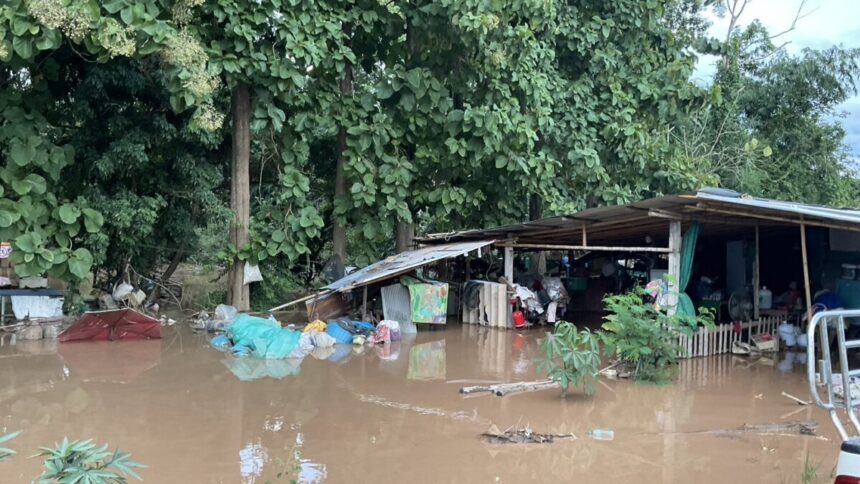
Thai authorities have declared a disaster zone across all 50 districts of Bangkok after days of relentless monsoon rain left roads submerged, canals overflowing and thousands of residents stranded.
The declaration, announced Saturday, followed nearly 300 millimeters of rainfall in the space of about 48 hours, according to Al Jazeera. Eastern parts of the capital were hit hardest, with water reaching waist height in some neighborhoods near the city’s canal network.
Bangkok governor Chadchart Sittipunt described the scale of the downpour as overwhelming. “The rain keeps falling and we are doing our best,” he said, according to the Al Jazeera report. “Every canal is now filled.” He later said conditions had stabilized, but only if the rain does not resume.
Thousands displaced, shelters filling up
Around 980 people have moved into temporary shelters as floodwater swallowed homes and shops, the Daily Sabah reported. Authorities also transferred 36 bedridden patients to hospitals as their care facilities became inaccessible.
No official death toll had been released as of Saturday. Still, residents told reporters the flooding felt worse than anything they had experienced in years. “I think this time is worse than the 2011 flood,” one resident said, referring to the disaster that killed more than 500 people nationwide and damaged millions of homes.
City officials have made MRT park and ride facilities free through October 2 to ease the strain on commuters, and pumping crews are working around the clock to clear waterlogged streets. Chadchart estimated it would take two to three days to drain the city once the rain lets up, a timeline complicated by a low pressure system forecast to linger through Sunday.
A wetter than usual monsoon season
The disaster zone designation gives district officials expanded authority to mobilize emergency resources, deploy personnel and access disaster relief funding without waiting on approval from the central government.
What makes this year’s flooding notable is not just the intensity of a single storm but the pattern behind it. Bangkok recorded 487 millimeters of rain between September 1 and September 25, well above the 269-millimeter average for that period between 1991 and 2020. September typically marks the peak of Thailand’s rainy season, but this year has run consistently wetter than the historical baseline.
Scientists have repeatedly warned that a warming planet is intensifying extreme rainfall events, and Bangkok’s geography leaves it especially exposed. The city sits on low, flat delta land near the mouth of the Chao Phraya River, much of it only slightly above sea level, and decades of urban development have paved over canals and wetlands that once absorbed heavy rain.
Part of a broader regional pattern
Bangkok’s flooding adds to a difficult monsoon season across South and Southeast Asia this year. Pakistan’s own monsoon rains and floods killed more than 100 people between June and August, with entire districts submerged and infrastructure damaged across multiple provinces.
Taken together, the two disasters underscore a trend disaster researchers have flagged for years: cities built on flood-prone deltas and river plains, from Karachi to Bangkok, are increasingly straining against rainfall patterns that no longer match the infrastructure designed decades ago.
For now, Bangkok’s immediate priority remains drainage and shelter. City officials say floodwaters could begin receding within days if rain eases as forecast, though residents in the hardest hit eastern districts may face a longer road back to normal given the scale of the damage to homes, shops and roads.
The Thai government has not yet announced a formal reconstruction or compensation package, something that followed the 2011 floods only after weeks of political wrangling over funding and blame between national and local authorities. How quickly Bangkok recovers this time may depend on whether that response comes faster.