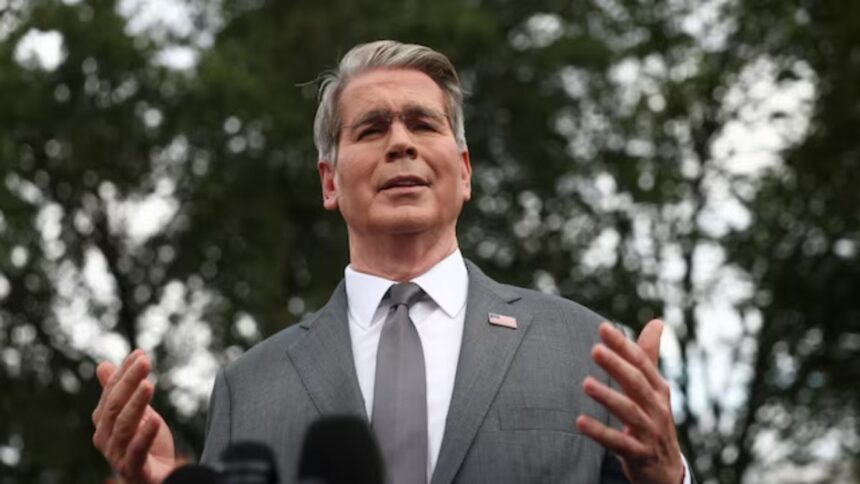
US Treasury Secretary Scott Bessent unveiled a sweeping new round of sanctions targeting Iran and its trading partners on Monday, calling the campaign “Operation Economic Outcast” and describing it as an economic onslaught aimed at severing the country’s remaining financial ties abroad.
What the Sanctions Cover
“Our objective is to sever every economic lifeline that sustains this tyrannical regime until Tehran stands alone,” Bessent said at a Treasury Department news conference. The measures expand secondary sanctions on entities and countries that transact with Iran and introduce new penalties across sectors including shipping, oil, digital assets, gold and aviation. Bessent said the Treasury Department would sanction more than 60 entities, individuals and vessels accused of helping Iran acquire nuclear and missile technology, and that a major financial institution would be sanctioned by the end of the week.
Bessent said any entity found to be facilitating money laundering on behalf of Iran “will be removed from the US dollar system,” and singled out Iran’s Bank Melli, which operates branches across the Gulf, saying it “must be shuttered and dark.” He added that not all sanctions would take effect immediately. “We are giving everyone the opportunity to remedy bad behaviour,” he said.
Trump Contacting World Leaders
Bessent said President Donald Trump was personally calling foreign leaders with “specific requests” to halt trade with Iran, though he declined to name which leaders had been contacted. Asked whether Chinese banks that finance Iranian oil imports could be targeted, Bessent said “no one is above the reach of US sanctions,” while noting the administration would also pursue “quiet diplomacy” with other governments.
He criticized countries that continue trading with Iran, including Gulf allies such as the United Arab Emirates, as guilty of “appeasement,” even as the UAE said last week it had suspended financial and economic transactions with Tehran.
Not Everyone Convinced
Some analysts questioned how much the new measures actually change on the ground. The US has maintained significant secondary sanctions on Iran’s oil sector for years, but enforcement has been inconsistent. “This was not economic D-Day,” said Brett Erickson, a Washington-based sanctions analyst, arguing the announcement expanded existing tools rather than introducing fundamentally new pressure. Israeli Prime Minister Benjamin Netanyahu praised the move in a social media post, congratulating Trump and Bessent.
Iran’s security chief, Mohsen Rezaei, vowed to “neutralise the economic war” and threatened to halt oil flow through the Strait of Hormuz, according to Iran’s state-affiliated Press TV, even as Tehran separately granted permission for a number of Iraqi oil tankers to pass through the strait following appeals from Baghdad, Reuters reported.
What Happens Next
US officials say the expanded sanctions campaign is expected to remain the primary form of pressure on Iran, at least until after the American midterm elections, rather than a return to military strikes. Whether the coalition of allies the administration is seeking to build materialises, and how forcefully the new penalties are enforced, will determine how much practical impact the campaign has on Iran’s economy.