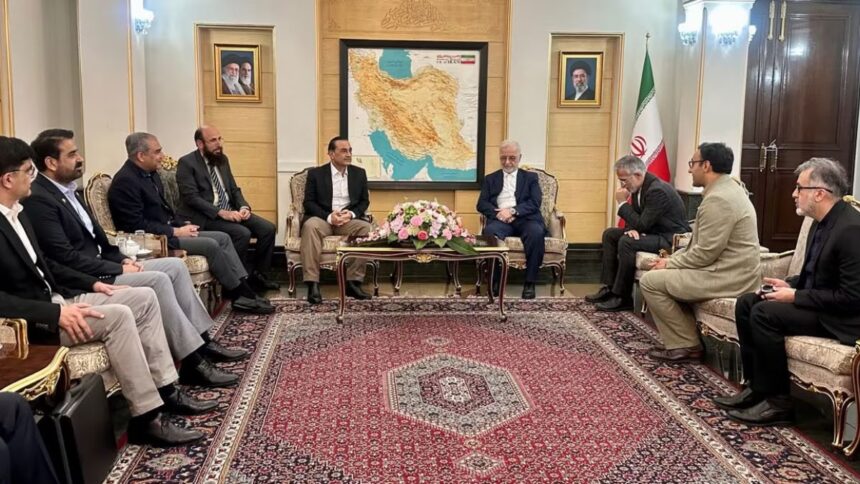
Chief of Defence Forces Field Marshal Syed Asim Munir concluded a day-long visit to Tehran this week, pressing Iranian leaders to reopen the Strait of Hormuz and pursue a negotiated end to the country’s conflict with the United States, as Pakistan deepens its role as a mediator between Washington and Tehran.
What the Visit Covered
According to a statement from the Inter-Services Public Relations (ISPR), Munir, accompanied by Interior Minister Mohsin Naqvi, held a series of high-level meetings in Tehran focused on preventing further escalation, reopening the Strait of Hormuz and working toward an expedited end to the conflict. During the visit, Munir met Iranian President Masoud Pezeshkian, Mohsen Rezaei, the Supreme Leader’s representative on the Supreme National Security Council, Parliament Speaker Mohammad Bagher Ghalibaf, Foreign Minister Abbas Araghchi and Interior Minister Eskandar Momeni.
“The Iranian leadership appreciated Pakistan’s constructive role and sincere efforts to facilitate dialogue, de-escalation and a peaceful resolution of the conflict,” the ISPR statement said. Naqvi, writing on social media after the visit, described the meeting with Pezeshkian as “very positive and productive,” saying discussions covered the US-Iran conflict, regional tensions and the steps needed by both sides to restore the Islamabad memorandum of understanding.
Iran Calls the Talks ‘Highly Fruitful’
An official in the Iranian presidential office described Munir’s visit as “highly fruitful,” saying it produced important diplomatic outcomes. Naqvi said Pezeshkian had candidly shared his government’s perspective and concerns during what he called a “very constructive exchange.”
The visit was Munir’s third trip to Tehran this year. He first travelled there in April, days after the Islamabad Talks, the first direct US-Iran negotiations in more than four decades, ended without a breakthrough, and returned again in May shortly after US Secretary of State Marco Rubio said there had been “slight progress” in talks between Washington and Tehran. This latest visit followed a reported phone call between Munir and US President Donald Trump last week.
A Deepening Mediator Role
Pakistan has positioned itself as a go-between since the conflict began on February 28 with US and Israeli strikes on Iran. The Shehbaz Sharif-led government brokered a two-week ceasefire on April 8 that brought six weeks of fighting to a temporary halt, and has continued relaying messages between Washington and Tehran since. The Islamabad MoU signed by the two countries on June 17 had envisaged further negotiations toward a permanent settlement, but renewed hostilities have since stalled that process, with the Strait of Hormuz, a critical global energy corridor, remaining the central sticking point.
Munir’s latest visit comes as Washington ramps up pressure on Tehran with an expanded round of sanctions unveiled this week, which US officials say are designed to cut off Iran’s remaining economic lifelines. Pakistan, alongside Qatar and Oman, has stepped up diplomatic contacts in recent weeks in an effort to break the deadlock.
What Happens Next
Neither Pakistan nor Iran has announced a specific timeline for reviving formal talks between Washington and Tehran. With the US sanctions campaign now in effect and Iran continuing to threaten measures affecting the Strait of Hormuz, Pakistan’s ability to translate this week’s diplomatic engagement into an actual de-escalation remains to be tested in the weeks ahead.