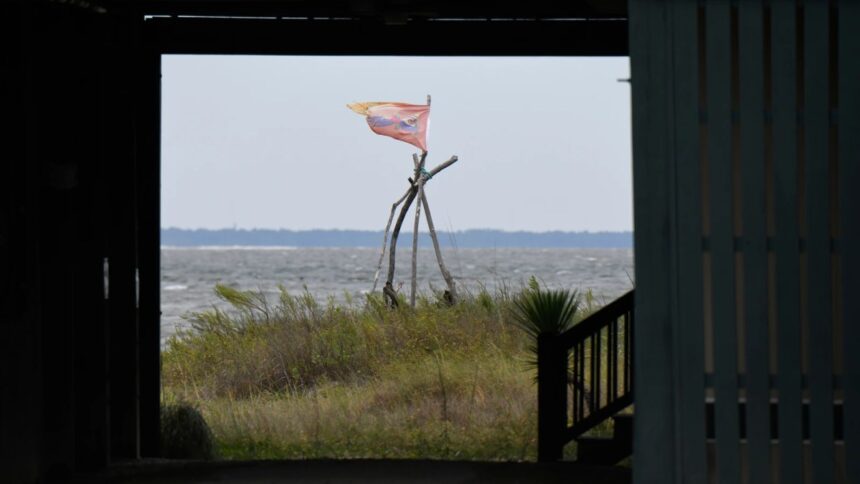
Hurricane Isaias came ashore near Destin, Florida, on Friday evening as a Category 2 storm. It brought storm surge, flooding rain and widespread power cuts to the northern Gulf Coast, the National Hurricane Center (NHC) said. Landfall came at about 8 p.m. Eastern time, CBS News reported.
The storm briefly reached Category 3 strength earlier in the day. Then it weakened. Sustained winds were about 90 mph on Friday night, and a gust of 112 mph hit Santa Rosa Sound. By early Saturday, the NHC listed Isaias as a post-tropical cyclone with 65 mph winds over southern Alabama.
What Hurricane Isaias has done so far
More than 697,000 customers lost power across Florida, Alabama and Georgia, according to PowerOutage.us figures cited by CBS News. In addition, the weather service warned that some communities could face long outages. Those stretch from Ocean Springs, Mississippi, to Gulf County, Florida.
Forecasters expected storm surge of up to 9 feet from the Alabama-Florida border to Grayton Beach. Rain of 4 to 8 inches was forecast along the coast, with local totals near 15 inches. Flooding may also spread inland over the weekend. Up to 10 inches could fall in the southern Appalachians and coastal Carolinas.
CBS News reported no deaths.
Evacuations and emergency declarations
Florida, Alabama and Georgia declared states of emergency. The federal government also approved emergency declarations for Florida and Alabama. Tens of thousands of people evacuated. Alabama Gov. Kay Ivey ordered tourists and non-residents out of Gulf Shores, Orange Beach and Dauphin Island, Arab News reported.
Florida Gov. Ron DeSantis called Isaias a major hurricane and warned of heavy surge. Dauphin Island Mayor Jeff Collier said he worried most about whether residents would heed the warnings. Meanwhile, President Donald Trump said White House officials were watching the storm closely.
A late storm in a quiet season
Isaias became a hurricane on Oct. 7. That is the latest date in 121 years for the first Atlantic hurricane of a season. It just missed a record from Oct. 8, 1905, NOAA said. Forecasters link the calm season mostly to a strong El Niño.
Why Pakistan readers should watch oil prices
The storm struck while Gulf of Mexico oil output was already disrupted. About 63 percent of Gulf production, roughly 1.3 million barrels a day, was shut in as of Thursday. Also, 121 of the Gulf’s 371 manned platforms were evacuated, Arab News reported. The region supplies nearly 15 percent of annual US crude output.
Pakistan imports a large share of its fuel. As a result, global crude moves tend to reach local pump prices with a lag. Petrol already rose to Rs398.96 a liter this week. However, the effect of Isaias on oil prices depends on how fast the shut-in platforms restart. That is not yet clear.
The storm’s remnants should keep bringing heavy rain and gusty winds across the Southeast through the weekend.
Sources: CBS News, Arab News, National Hurricane Center, NOAA.