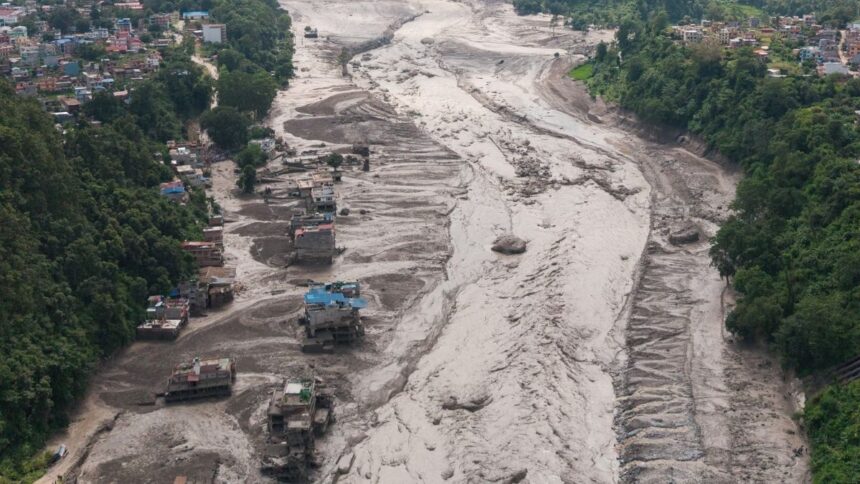
Rescue teams in Nepal and Tibet have recovered at least 682 bodies from the flash flood that struck the border region on Wednesday, with more than 3,000 people still listed as missing, as officials warn that many of the dead may never be identified given the scale of decomposition and the force of the water.
A Death Toll Still Climbing
Nepal’s disaster authorities said 675 people have been confirmed dead within the country, with 2,498 still missing, while Chinese authorities in Tibet have raised their toll to seven deaths and 554 missing. Nepal has rescued at least 7,514 people, including 227 foreign nationals, and treated or discharged 219 injured, according to the Nepal National Disaster Management Authority. Some of the missing may have been swept downstream as far as India, officials said.
Chitwan district, dozens of miles downstream from the worst-hit areas, has alone yielded 186 recovered bodies. Bishal Nath Upreti, president of the Nepal Centre for Disaster Management, said the country lacks the capacity to store such a large number of severely damaged remains for an extended period, with many bodies too decomposed for visual identification. Nepal is coordinating forensic identification efforts with India and China, and Israeli forensic experts are expected to arrive to assist.
Grim Work in the Mud
Rescue worker Kawan Koirala of the Nepal Scout Disaster Response Team described searching through “thick, leg-sucking mud” after an 18-hour shift. “People want their family’s body back, either dead or alive, but we cannot find them,” he told AFP. Of 49 bodies brought to one hospital, only seven had been identified as of Saturday, with the Chitwan district administration saying unidentified remains would be buried after DNA sampling and legal formalities, citing health risks and fears of disease.
Nepal’s disaster authority has added 933 hydropower workers to its list of people out of contact, alongside trekkers and pilgrims who had been travelling toward Tibet’s Mount Kailash at the time of the disaster.
What Caused It
Chinese officials have confirmed, alongside Nepali authorities, that the disaster was triggered by a high-altitude glacial collapse in the northern Rasuwa district, which sent a wall of ice, water, rock and mud down river valleys around 8:40am local time Wednesday. The flooding tore through communities along the Trishuli River, destroying bridges, roads and hydropower infrastructure, with satellite imagery showing entire village footprints erased in the hardest-hit areas.
India has increased monitoring of its own Himalayan regions bordering Nepal and China in the disaster’s aftermath, and US President Donald Trump has said Washington is willing to send “any help” Nepal requests.
Why It Matters
With rescue crews still working through debris and hazardous terrain days after the disaster, and with a newly formed barrier lake near the border continuing to threaten further flooding downstream, officials in both countries say the confirmed death toll is likely to keep rising. The scale of destruction has already made this one of the deadliest natural disasters in Nepal’s recent history.