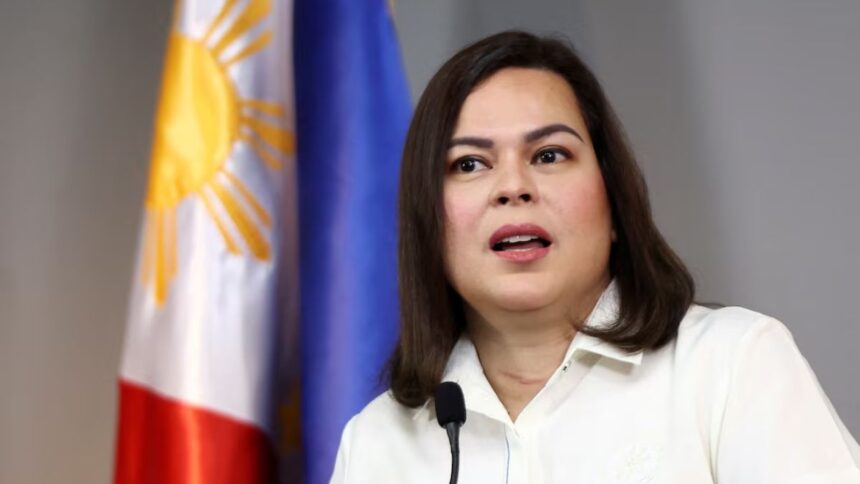
A Philippine court has ordered the arrest of Vice President Sara Duterte over allegations that she threatened to kill President Ferdinand Marcos Jr., his wife, and a former House speaker, adding a criminal case to the political battle already playing out in her Senate impeachment trial.
Charges Rooted in a 2024 Press Briefing
The Quezon City Regional Trial Court issued the warrant on Friday for three counts of grave threats, setting bail at 120,000 pesos, or roughly 1,900 dollars, for each count, according to Philstar. The charges stem from a November 2024 online news conference in which Duterte said she had instructed someone to kill Marcos, First Lady Liza Araneta-Marcos, and then House Speaker Martin Romualdez if she herself were killed.
“No joke, no joke,” Duterte said at the time, according to a transcript cited by TIME. The court found probable cause to hold her for trial on all three counts and rejected a motion from her legal team to defer the warrant.
Tied to Her Ongoing Impeachment Trial
The same alleged threats form part of the articles of impeachment against Duterte in an ongoing Senate trial, where a guilty verdict would remove her from office and bar her permanently from politics, according to NPR. Duterte’s lawyers have argued she cannot face separate criminal prosecution while impeachable conduct is being examined by the Senate, but the Department of Justice has rejected that argument.
Duterte’s lawyer said in a statement that she “has no intention of evading the law and will continue to exercise all her legal remedies,” according to Al Jazeera. She is expected to post bail rather than face immediate detention, and a conviction on the criminal charge alone carries a maximum sentence of six months.
A High Stakes Political Fight
Despite the mounting legal troubles, Duterte remains a dominant figure in Philippine politics, with recent surveys showing her as the top preferred candidate to eventually succeed Marcos, a former political ally with whom she has since had a public falling out. Marcos is limited to a single six year term under Philippine law.
The presidential office said in a statement that it “respects the decision of the court” to issue the warrant, without further comment on the case.