President Trump vowed a harsh military response after Iran fired missiles at US bases in Jordan on Sunday night, telling Fox News “we’re going to hit them hard” as the exchange marked the most serious escalation between the two countries in a month.
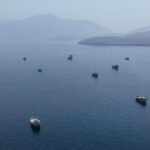
The strikes followed American attacks on Iranian rocket launchers in the Strait of Hormuz earlier that day, and pushed oil prices sharply higher as markets weighed the risk of renewed, sustained fighting.
Trump’s Response
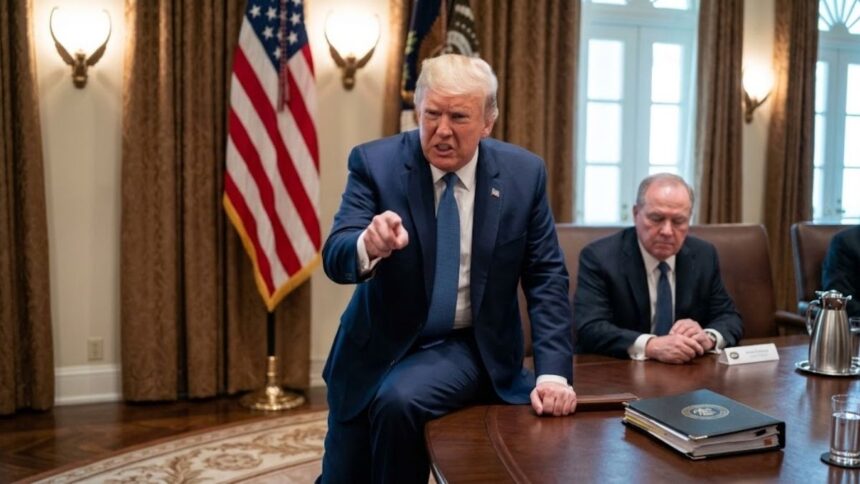
“We’re going to hit them hard,” Trump told Fox News correspondent Trey Yingst. “There will be a response.” He said US air defenses intercepted all but one of the missiles Iran fired at the Jordan bases, and that the one missile allowed through “was identified as not going to hit anything significant.”
In a separate Truth Social post, Trump was more dismissive, calling Iran a “failed nation” and writing that the country has “no Navy, they have no Air Force, they have no currency, they are not paying their soldiers or police.” He also claimed Iranian inflation had reached 300 percent and accused Tehran’s leadership of being in “total disarray.”
Trump also shared an AI-generated video depicting an assault on Iran’s Kharg Island, a major oil export terminal, captioning it “Kharg Island being blown to smithereens!!!” He separately told reporters that Iranian officials want to “meet so badly,” though he added he did not know “if you can count on them to make a deal.”
Iran’s Position
Iran’s Foreign Ministry confirmed Monday that its forces had targeted US bases in Jordan in direct response to Sunday’s American strikes on Islamic Revolutionary Guard Corps positions on Larak Island. The ministry, in a statement carried by the semi-official Mehr News Agency, said the Jordan bases had been used to launch and support attacks on Iran, and said Iran’s armed forces “will not hesitate to exercise the inherent right of self-defense.”
Iranian President Masoud Pezeshkian struck a more measured tone Monday morning, telling reporters Tehran is “not looking for war,” while warning that Iran “will give a decisive response” if further attacked.
The IRGC issued a sharper warning in a statement to Iran’s state-run Fars News Agency, saying “aggression and crimes will not solve the enemy’s desperation in attempting to weaken the Islamic Republic’s control over the Strait of Hormuz, and every attack will be met with even more devastating responses.”
A Wider Regional Incident
The United Arab Emirates’ Defense Ministry said Monday that its air force intercepted a drone detected over the country’s territorial waters approaching from Iran’s direction. The ministry separately denied Iranian media reports claiming that Al Minhad Air Base, south of Dubai, had been targeted by missiles.
The incident adds another layer of regional tension beyond the direct US-Iran exchange, underscoring how quickly the conflict’s effects can spread to neighboring Gulf states even when they are not the intended target.
Markets React
Oil prices jumped sharply Monday as the strikes rattled markets already on edge over the six-month conflict. Brent crude, the international benchmark, rose 3.4 percent to trade near $91.09 a barrel, while West Texas Intermediate futures climbed the same amount to around $86.22.
The price spike reflects growing concern that the latest exchange could mark the start of a sustained new phase of fighting, rather than an isolated incident, particularly given the direct threats both sides have now made.
Why It Matters
The pointed exchange between Trump and Iranian officials, combined with the direct military strikes and the drone incident near the UAE, suggests the month-long lull in fighting has decisively ended. With Trump promising a hard response and Iran’s military leadership vowing even more devastating retaliation in return, the coming days are likely to test whether either side is willing to step back from further escalation.