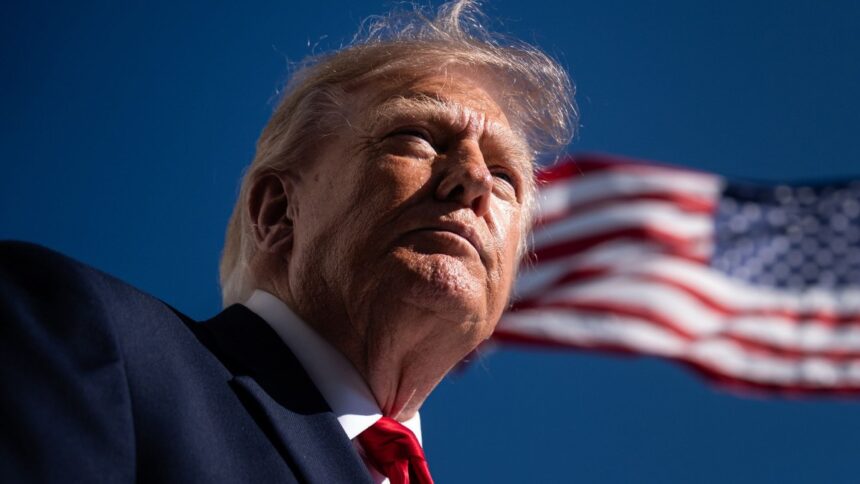
President Donald Trump has said the United States will not attack Iran before the midterms. It is a rare public timeline in a war now in its eighth month.
Trump posted the pledge on Truth Social on Thursday. He wrote that “we will not be attacking Iran at any time prior to the Midterm Elections,” CNN reported.
He added that the US blockade of Iran’s oil exports and ships had left the country in a “very bad condition.”
Why Trump and Iran are tied to the midterms
The pledge followed reports by The Atlantic and Axios that the White House was weighing a return to major combat before the November 3 vote. Some Republicans in tight races want the war to end instead. Michigan Senate nominee Mike Rogers has said it needs to end quickly.
Prices are the main reason. Gasoline averages $4.36 a gallon nationally, and diesel remains expensive, according to CNN.
Two new surveys show the strain. A CNN/SSRS poll found more than 7 in 10 voters in Iowa and Ohio say Trump’s policies have raised the cost of living. A Pew Research Center report found 74 percent of Americans are concerned about gas and energy prices, up from 43 percent before the war.
As a result, Republicans face tough races for Congress in states Trump won easily two years ago, including Iowa, Ohio and North Carolina.
What happens after the election
Trump did not rule out new attacks once voters have gone to the polls. The Wall Street Journal reported last week that Washington is sending another aircraft carrier strike group and an additional Marine expeditionary unit to the region. It also reported that Trump has told aides he expects to resume bombing after the midterms.
Meanwhile, Trump rejected an Iranian offer at the end of September. Tehran had proposed reopening the Strait of Hormuz and resuming nuclear talks in return for easing the blockade.
Iran shows no sign of backing down. National security adviser Mohsen Rezaei said this week that the country will never surrender.
Democrats could also win the House or the Senate in November. If they do, a fight over war powers and funding for the Iran campaign is likely next year. The war had cost about $45 billion by mid-September.
Oil flows remain fragile
The Strait of Hormuz is the key pressure point. Oil flows from the Gulf states other than Iran have returned almost to normal under a US-coordinated operation.
That progress is fragile, however. Reuters reported only seven crossings on Tuesday, the lowest level in more than two months, and ten on Wednesday. Benchmark Brent crude also rose 4 percent on Thursday as fighting between Yemen’s Houthis and Saudi Arabia intensified.
What it means for Pakistan
Pakistan imports much of its energy, so a longer war and higher oil prices add pressure at home. The IMF pointed to the Middle East conflict and higher energy prices when it reached a staff-level deal with Pakistan this week. Wire Examiner covered that agreement in our report on the IMF deal.
Islamabad is also watching the Gulf closely. Pakistan’s military spokesman has said Pakistan will defend Saudi Arabia under the Makkah Joint Defence Agreement, according to Pakistani media reports.
Trump’s pledge covers only the weeks before the vote. What comes after November 3 remains unclear.