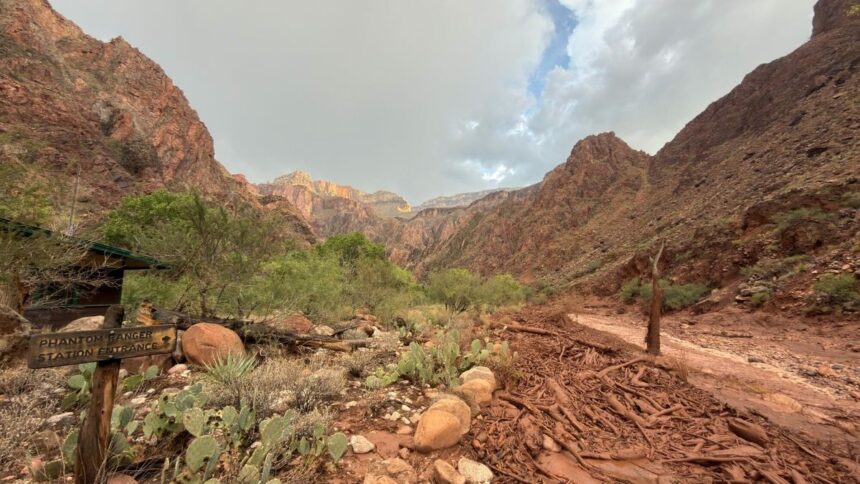
Two people have been confirmed dead after a devastating flash flood swept through the inner canyon of Grand Canyon National Park over the weekend. Most of the people initially believed to be missing have now been accounted for, though authorities said at least one person remained unaccounted for as of Monday evening.
More than 62 individuals were evacuated by helicopter from Phantom Ranch and the lower North Kaibab Trail, which bore the brunt of the flooding. The National Park Service described the event as a “significant flash flood” that caused extensive damage to infrastructure deep within the canyon.
How the Flood Unfolded
According to the National Weather Service, about half an inch to an inch of rain fell within just 30 minutes in the rocky terrain, where steep elevation drops caused the water to run off instantly. Three initial waves of rain had already primed the drainages and pushed creeks to minor levels before a deadly fourth wave struck.
The body of a 46-year-old man was recovered near Crystal Rapids along the Colorado River on Sunday evening. A second body was pulled from the flooded area on Monday. Authorities have not yet publicly identified the victims.
Extensive Infrastructure Damage
The flooding caused extensive damage to infrastructure in the inner canyon, including the Transcanyon Waterline, which supplies water from the canyon floor for use throughout the park. The waterline is currently not operational, leaving the park with limited water reserves and requiring significant conservation measures.
Remnants of stone bridge pylons along Bright Angel Creek were among the visible signs of destruction. Campgrounds and hiking trails at the bottom of the park were heavily impacted.
More Storms Expected
The National Weather Service issued a flood watch for the Grand Canyon through at least Monday evening, warning that flash flooding from excessive rainfall continued to be possible across all of northern and central Arizona.
The flooding was part of Arizona’s monsoon season, which runs from June 15 through September 30. Atmospheric moisture levels have been five to 15 percent higher than normal this summer across the U.S., including near the Grand Canyon, helping to fuel extreme rainfall events.
Grand Canyon National Park Deputy Superintendent Brian Drapeaux said the park remains open and accessible to both the North and South rims, but urged visitors to exercise extreme caution given the ongoing flood risk.