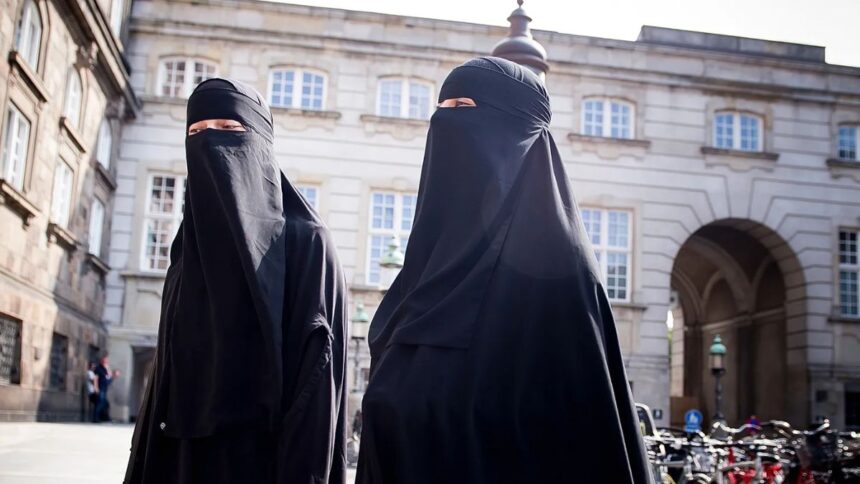
Portugal has enacted a law banning the concealment of faces in public spaces, a measure pushed by the far right and widely seen as targeting Muslim women who wear full-face veils such as the burqa or niqab, AFP reported.
What the Law Says
President Antonio Jose Seguro signed the legislation into law, saying in a statement that “the face must be considered a central element of human identity and communication.” He also acknowledged, according to AFP, that the issue carries great social and cultural sensitivity.
The law prohibits clothing designed to conceal the face or prevent identification in public spaces, and separately makes it an offence to force another person to cover their face for reasons related to gender, religion, age or origin. Fines for violations range from 150 to 3,000 euros. The legislation includes exemptions for health, professional, artistic or weather-related reasons, as well as for places of worship, diplomatic missions and aircraft.
How the Law Was Passed
Local media have dubbed the measure the “burqa law.” It was originally proposed by the far-right Chega party and passed parliament in July with support from the right-wing governing coalition and Chega, while left-wing parties voted against it. Earlier drafts of the bill referred more directly to burqas and veils associated with Islam; those explicit references were later removed, and the final law is framed as a general rule on face concealment and identification in public spaces.
Portugal now joins France, Belgium, Austria, Denmark and the Netherlands among European countries that already have full or partial bans on face coverings in public.
Supporters and Critics Disagree Sharply
Backers of the law, including Chega leader Andre Ventura, have framed it as a protection for women, arguing that full-face coverings restrict women’s freedom and visibility in public life. Chega has previously described the spread of such garments in Europe in stark terms, calling for what it presents as a defence of women’s rights in the name of gender equality.
Rights groups take the opposite view. Amnesty International Portugal called the law discriminatory and a threat to human rights, warning that a blanket ban is likely to have the opposite of its stated effect. “Women who choose to wear full-face veils may face greater exclusion from public life, social isolation or increased difficulties in accessing education, employment and public services,” the organisation said. Amnesty also argued the law raises concerns about the right to privacy and to freedom of peaceful assembly, since it separately restricts face coverings at public demonstrations.
Part of a Wider European Debate
France became the first European country to ban full-face veils in public in 2011, and similar measures have since followed in several other countries. Spain’s Balearic Islands are separately considering a comparable ban proposed by the right-wing Vox party, while Italy’s governing coalition has floated similar legislation as part of a broader package addressing what it calls Islamic separatism. The debate in Portugal, as elsewhere in Europe, sits at the intersection of security, identification, religious freedom and women’s rights, with little agreement between supporters and critics on which side of that balance the law actually serves.