While US President Donald Trump and Chinese President Xi Jinping spent this week trading toasts and extending their trade truce in Washington, Taiwan was quietly staging its own show of force. On Tuesday, the island’s military unveiled a new domestically built armored vehicle in a live-fire demonstration, a pointed reminder that Taipei is not waiting on Washington’s summitry to decide its defense.
A new gun system takes the stage
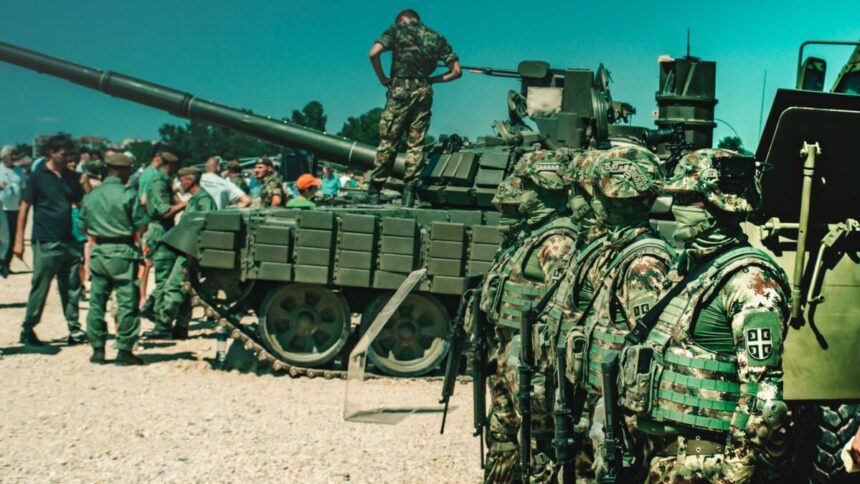
Taiwan’s Ministry of National Defense put the 105mm mobile gun system, widely referred to as the Cheetah, through its paces on September 23, striking targets at ranges of 1.2 kilometers and 1 kilometer. Maj. Gen. Chen Chien-chung said design changes since the 2023 prototype, including a lower profile and a tighter nine-meter turning radius, make the vehicle better suited to Taiwan’s terrain, from narrow culverts to dense urban streets in counties such as Hualien and Taitung.
The military plans to field 178 of the vehicles, with mass production starting in 2027. Planned upgrades include anti-drone cage armor and canister ammunition designed to counter the small drones that have reshaped modern battlefields from Ukraine to the Middle East.
Timing that speaks for itself
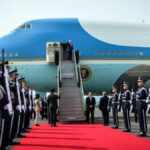
The demonstration landed a day before Xi arrived in Washington for his third in-person meeting with Trump in less than a year, a summit that Taiwanese officials have watched warily given the island’s dependence on American arms sales. Taiwan’s Defense Ministry has said it will keep pushing to complete its procurement deals with Washington on schedule and noted that the United States has “repeatedly expressed support for Taiwan’s self-defense capabilities.”
That confidence has been tested before. An earlier $14 billion arms package was paused following Trump’s state visit to Beijing in May, and Trump has at times described further sales to Taiwan as a “negotiating chip” in the broader US-China relationship. Building more of its own hardware, officials in Taipei argue, reduces how exposed the island is to shifts in Washington’s China policy.
Record defense spending on the way
The Cheetah rollout is part of a much larger buildup. Taiwan’s defense budget is set to reach NT$1.1225 trillion, or roughly $30.4 billion, in 2027, pushing military spending above 3 percent of GDP for the first time in the island’s history. President Lai Ching-te has framed the increase in defensive terms, saying “investing in national defense is investing in peace,” and his government has committed to lifting that figure to 5 percent of GDP by 2030 under sustained pressure from Washington to spend more on its own protection.
The jump follows a separate $40 billion special budget for weapons purchases approved late last year, aimed partly at building out an air defense system to counter the growing pace of Chinese military activity near the island. Taiwan’s 2026 general budget itself only cleared parliament after an eight-month delay, the longest in the island’s history, underscoring how contentious defense spending decisions remain in Taipei’s fractious legislature.
Why Taiwan cannot just watch from the sidelines
Taiwan’s 23 million residents live under the constant shadow of China’s claim that the self-governed island is part of its territory, by force if necessary. Beijing routinely objects to US arms sales to Taipei and has stepped up military flights and naval activity around the island in recent years. For Taiwan, every Trump-Xi meeting carries an implicit question: will Washington’s commercial and diplomatic interests in Beijing ever come at Taiwan’s expense.
That uncertainty is precisely why officials in Taipei have leaned into homegrown weapons programs like the Cheetah. A domestic production line is not vulnerable to a pause in Washington or a change in an American president’s negotiating posture. It also allows Taiwan to make its own case, through hardware rather than diplomacy, that it intends to defend itself regardless of how the great-power relationship between Washington and Beijing evolves.
The bigger picture for the region
The contrast between this week’s two storylines, ceremony and trade truce in Washington, tanks and budget votes in Taipei, captures the tension running through US-China relations more broadly. Trump and Xi can extend a tariff truce and talk up cooperation on artificial intelligence, but the underlying military buildup around Taiwan continues regardless of the tone in any single summit.
For the rest of the Indo-Pacific, Taiwan’s steady rise in defense spending is a signal that regional powers are hedging against exactly the kind of unpredictability that has marked the Trump-Xi relationship since 2025. Japan, South Korea and Australia have all faced their own versions of that calculus in recent years, weighing how much to rely on American security guarantees versus building up independent capability. Taiwan’s answer, at least for now, appears to be both at once: keep pushing for US arms deliveries while racing to build more of its own.