
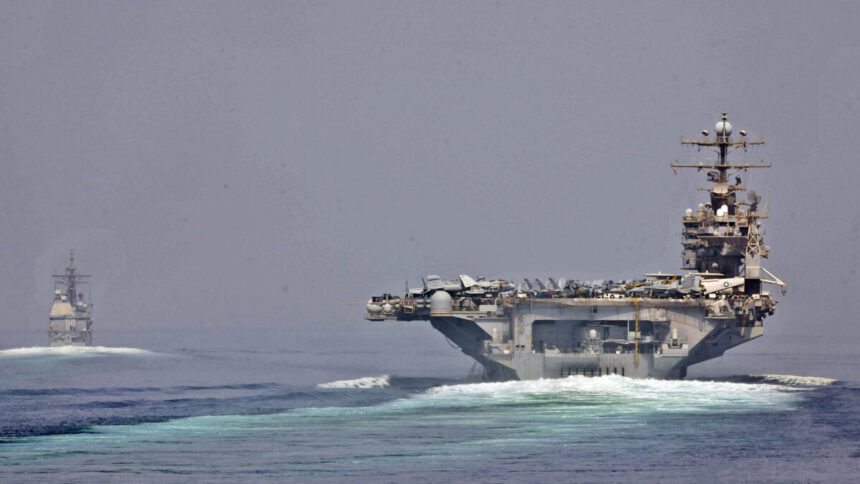
President Donald Trump has rejected an Iranian proposal to end the monthslong Gulf war within a week, telling aides he expects to resume bombing Iran once the November midterm elections are out of the way, the Wall Street Journal reported on Friday.
Tehran’s plan called for reopening the Strait of Hormuz to commercial shipping within seven days, but only if Washington met a set of conditions first: releasing roughly $12 billion in frozen Iranian assets, lifting oil sanctions, ending the US naval blockade of Iran, and halting all hostilities in Lebanon.
Unnamed US officials cited by the newspaper said Trump ruled out the offer almost immediately, doubting Iran would actually follow through on its side of the bargain. The president has repeatedly said his priorities are blocking Iran from ever acquiring a nuclear weapon and guaranteeing free passage for ships through Hormuz, one of the world’s most important oil chokepoints.
Tehran says the choice is Washington’s
Iranian Foreign Minister Abbas Araghchi struck a defiant tone in response. “The choice now rests with the United States,” he said. “Iran does not accept coercion, threats or intimidation.”
A US official told Al Jazeera that Washington sees itself in a “strong position” in the standoff and is “in no hurry to respond” to Tehran’s proposal. That posture suggests the administration believes time and battlefield pressure are on its side, even as the economic toll of the conflict continues to build on both sides.
Indirect negotiations have not collapsed entirely. Qatari officials are still relaying messages between the two governments on the sidelines of the United Nations General Assembly in New York, according to Al Jazeera. Analysts quoted in that reporting described “an enormous amount of scepticism in Washington” that the two sides are anywhere close to agreement on the substance of a deal.
A conflict that keeps resetting
This is not the first framework to fall apart. An earlier arrangement known as the Islamabad Memorandum of Understanding, brokered in part through Pakistani diplomacy, collapsed in August after Washington and Tehran each accused the other of breaching its terms.
Since then, senior Iranian security official Mohsen Rezaei has laid out conditions similar to the ones now on the table: an end to the war “on all fronts,” release of frozen assets, and a halt to the naval blockade. The overlap suggests Tehran’s core demands have not shifted much in six weeks, even as the fighting has ground on.
The wider region has grown more volatile in recent days as well. A Saudi-led coalition intercepted two Houthi drones headed toward Riyadh and a missile fired near Khamis Mushait, and Gulf Cooperation Council states have called for a firm international response to the attacks. The escalation underscores how the US-Iran standoff has increasingly drawn in actors well beyond the two principal combatants.
Why it matters beyond Washington and Tehran
Pakistan has spent recent weeks trying to keep a diplomatic channel open between the two sides, most recently when Interior Minister Mohsin Naqvi traveled to Tehran for talks that Iranian officials described as bilateral rather than a formal mediation mission. Wire Examiner has followed that effort closely, including earlier coverage of Islamabad’s push to nudge both governments toward de-escalation.
Trump’s rejection of the latest offer complicates that quiet diplomacy. Any Pakistani-backed framework depends on both Washington and Tehran being willing to move off their opening positions, and the swift dismissal of Iran’s seven-day plan signals the administration is not there yet, at least not before the midterms.
The economic stakes extend well beyond the two governments involved. A prolonged closure or disruption of shipping through Hormuz, which carries roughly a fifth of the world’s oil supply, has already pushed up global energy prices and rattled markets across the Gulf and South Asia, including the Pakistan Stock Exchange. Countries that depend on Gulf remittances and energy imports, Pakistan among them, have a direct stake in how quickly, or slowly, this standoff gets resolved.
What comes next
For now, officials on both sides are keeping details of the back-channel discussions closely held, and no public timeline has been set for a formal response from Tehran. Trump has told aides he expects a new bombing campaign once the midterm elections conclude in November, though he has also suggested at times that a deal could come together quickly if Iran shifts its position. Neither outcome appears imminent, and the diplomatic track that briefly looked promising in August remains, for now, stalled.