President Donald Trump announced on Friday that the United States and Denmark have reached an agreement giving Washington what he called “permanent control over security, and all other needs” in Greenland, marking a dramatic turn in a standoff that began with his repeated threats to annex the Arctic territory outright.
The deal keeps Greenland under Danish sovereignty while expanding the American military footprint on the island, according to details confirmed by officials in Washington and Copenhagen. Trump said the United States would “immediately” begin building up its presence there.
Speaking after the announcement, Secretary of State Marco Rubio called the agreement a “historic deal” and a “huge win” for American security interests, saying it “permanently and completely addresses our national security concerns” in the Arctic.
What the agreement covers
Under the terms described by officials, the pact bars any non-NATO military bases from operating in Greenland and explicitly shuts the door on Chinese and Russian installations. It also restricts investments from countries considered adversarial to Washington and its allies, a provision aimed squarely at Beijing’s interest in the island’s rare earth deposits and shipping lanes opening up as Arctic ice recedes.
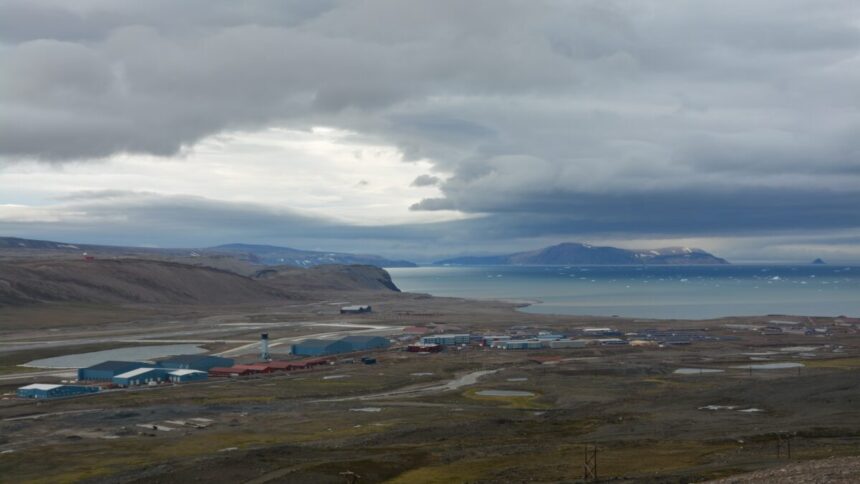
The United States has maintained a foothold in Greenland since 1951 through Pituffik Space Base, formerly known as Thule Air Base, which sits roughly 750 miles north of the Arctic Circle and hosts missile-warning radar and satellite-tracking systems. That base will reportedly form the anchor for the expanded American presence envisioned under the new deal.
Danish Prime Minister Mette Frederiksen said the agreement would be formally signed next week on the sidelines of the United Nations General Assembly, though it still requires approval from both the Danish parliament and Greenland’s own government before taking effect.
Frederiksen framed the deal as a win for Greenlandic autonomy rather than a concession, saying it “recognizes the sovereignty and territorial integrity” of both Denmark and Greenland along with the island’s right to self-determination. Greenland’s prime minister, Jens-Frederik Nielsen, struck a similar note, saying the agreement “recognizes Greenland’s interests.”
From annexation threats to a negotiated pact
The announcement caps a tense year in relations between Washington and Copenhagen. Trump had repeatedly demanded that Denmark sell Greenland to the United States and did not rule out using military or economic force to acquire it, comments that alarmed NATO allies and prompted Denmark and Greenland to publicly reaffirm they were not for sale.
Those threats also pushed Denmark and other NATO members to accelerate Arctic security cooperation earlier this year, partly as a hedge against unpredictable American pressure even as Trump himself later appeared to walk the annexation threat back.
Analysts said the shift from coercion to a negotiated security pact reflects the diplomatic cost Trump’s earlier rhetoric had already imposed. One Europe-based analyst noted that the aggressive posturing “was damaging for the image of the United States in Europe,” even if the eventual outcome gives Washington much of what it originally sought without a formal transfer of sovereignty.
Why it matters beyond the Arctic
Greenland’s strategic value goes well beyond its ice sheet. The island sits astride emerging Arctic shipping routes that are expected to shorten transit times between Asia, Europe and North America as polar ice continues to melt, a shift that could eventually reshape global trade flows far from the Arctic itself, including routes that touch shipping-dependent economies like Pakistan’s.
Its subsoil is also believed to hold significant deposits of rare earth minerals used in everything from smartphones to fighter jets, resources that China currently dominates in global supply chains. Locking Beijing and Moscow out of Greenland fits into a broader pattern of great powers using security and investment agreements, rather than outright territorial control, to secure access to strategically located ground, a dynamic familiar to countries like Pakistan that have navigated competing major-power interests around ports and infrastructure of their own.
The agreement also lands amid wider friction between Washington and Moscow over Arctic militarization and follows warnings from US officials earlier this year about Russian activity near NATO’s northern flank. A more entrenched American military presence in Greenland is likely to be read in Moscow and Beijing as a signal that Washington intends to compete more directly for Arctic influence in the years ahead.
For NATO, the deal removes a persistent irritant within the alliance at a moment when unity on Russia policy remains a priority, even as questions linger over exactly how much operational latitude Denmark and Greenland will retain over an expanded American base network on their own territory.
The agreement’s full text has not yet been made public, and both governments say the specifics will become clearer once it is formally signed and put before lawmakers in Copenhagen and Nuuk in the coming weeks.