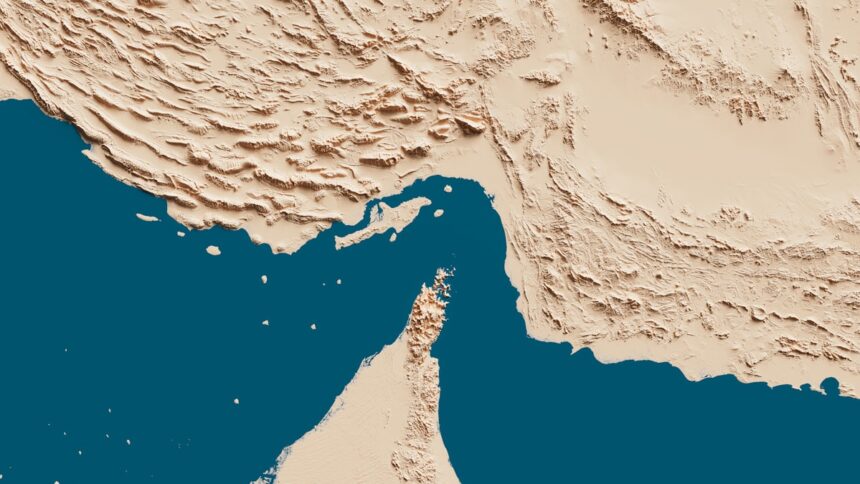
US forces struck two Iranian rocket launchers on Larak Island in the Strait of Hormuz on Sunday, the first direct American military action against Iran in a month, breaking a lull in a war between the two countries that has now dragged on for more than six months.
Iran responded within hours, saying its Revolutionary Guard had fired ballistic missiles at two US military bases in Jordan. Washington said the strike was necessary to stop Iran from restoring its ability to mine the strait, a waterway through which roughly one-fifth of the world’s oil normally flows.
What Triggered the Strike
US Central Command spokesperson Tim Hawkins said American surveillance had detected Revolutionary Guard forces preparing to launch rockets loaded with sea mines toward the strait. US forces struck two rocket launchers on Larak Island in response, a US official told Fox News.
The timing carried added weight because American forces had only just finished clearing existing sea mines from the strait’s international shipping lanes the previous week. CENTCOM said in a statement it remained “prepared to protect the free flow of commerce through this essential waterway.”
Semiofficial Iranian outlets reported hearing explosions near Larak Island shortly after the strike. Iran’s Revolutionary Guard later confirmed the attack in a statement carried by state broadcaster IRIB, acknowledging what it called “the martyrdom and injury of several of our fighters and compatriots” and vowing the strike would “result in the punishment of the aggressor.”

Iran’s Retaliation
Iranian state television later broadcast footage it said showed ballistic missiles being fired at US bases in Jordan. The claim had not been independently verified as of Sunday evening.
IRGC spokesperson General Hossein Mohebi called the American strike a “fatal mistake by the Trump regime during the economic war,” warning that consequences would be felt “militarily and economically.” Ebrahim Azizi, head of the Iranian parliament’s national security commission, posted a more direct threat on social media, writing in English that retaliation was “coming” and warning Washington to “wait in fear and terror.”
US officials said nearly all incoming missiles aimed at the Jordan bases had been intercepted, with no significant impacts reported. The claim of Iranian casualties from the initial US strike has not been independently confirmed, and Iran did not provide a specific death toll.
A War That Has Simmered for Months
The current round of fighting between the US and Iran began on February 28, when American and Israeli forces struck a range of Iranian military targets. The conflict has continued in fits and starts since, including a US blockade of Iranian ports that began in April and a wave of American strikes in July that hit Iranian command centers, missile facilities, and coastal surveillance sites.
Sunday’s strike was the first acknowledged direct American action against Iran since that July 29 operation, according to Newsweek. Analysts told Radio Free Europe/Radio Liberty that the strike mattered less as a standalone military action than as a signal that Washington remains willing to use force to keep Iran from threatening shipping through Hormuz.
Since the war began, Iranian forces have targeted US bases and infrastructure across Gulf countries, struck commercial vessels transiting the strait, and fired missiles into neighboring countries. The International Maritime Organization has recorded at least 71 attacks on ships in the strait since fighting began, with 19 merchant sailors killed.
Oil Markets React
Crude oil prices rose following the strike. US crude climbed 1.8 percent to $84.94 a barrel, while Brent crude, the international benchmark, rose 1.9 percent to $89.79.
President Trump has repeatedly said the Strait of Hormuz remains open for shipping, pointing to 24 vessels that passed through over the past week. That figure remains a fraction of the roughly 130 vessels that transited the strait daily before the war began, underscoring how badly the conflict has disrupted one of the world’s most important oil corridors.
CENTCOM said separately that its forces have redirected 83 commercial vessels, disabled three, and boarded two since the blockade began, as part of ongoing efforts to enforce restrictions on shipping through the strait.
Why It Matters
Sunday’s exchange shows how quickly the conflict can escalate even after weeks of relative quiet, and how central control of the Strait of Hormuz remains to both sides’ strategy. With Iran vowing further retaliation and Washington signaling it will continue enforcing the blockade by force if necessary, the risk of a broader flare-up in the coming days appears elevated.
Tehran has also tied any resumption of normal shipping through the strait to a broader management agreement it is negotiating separately with Oman, meaning even a pause in direct fighting may not immediately restore the flow of oil and gas that the global economy depended on before the war began.