Germany’s far-right Alternative for Germany party notched another breakthrough on Sunday, finishing first in the state of Mecklenburg-Vorpommern and pushing the ruling Christian Democrats to their worst state election result in 75 years.
Voters in Mecklenburg-Vorpommern and the capital city-state of Berlin went to the polls in elections that exit polls showed splitting the country’s political map even further between the far right and the far left.
In Mecklenburg-Vorpommern, the AfD won roughly 38 percent of the vote, edging out the governing Social Democrats on about 36.5 percent. Chancellor Friedrich Merz’s Christian Democratic Union collapsed to just 5 percent, its lowest state-level showing since a 9 percent result in Bremen back in 1951.
In Berlin, the far-left Die Linke topped the vote with about 26 percent, well ahead of the AfD’s 13.5 percent, as the CDU and the Greens trailed further behind.
Merz, whose approval rating has slipped to around 14 percent after 16 months in office, called the results a “disaster.” He told reporters that “the answer cannot be to go back to the good old days,” according to reporting carried by CNN and its affiliates.
AfD co-leader Alice Weidel wasted no time claiming vindication. “We are clearly the new people’s party in Germany,” she said, adding that “we have overtaken the CDU, and people want a change of policy.” She went further, saying the CDU “cannot continue with Friedrich Merz” as leader.
A pattern that keeps repeating
Sunday’s vote was the AfD’s second major state-level showing in two weeks. The party won about 44 percent in Saxony-Anhalt on September 6, nearly securing an outright majority there, as Wire Examiner reported at the time.
Analysts say the party’s gains are being driven by economic discontent in the former East Germany and hardening anti-immigration sentiment, themes the AfD has leaned into with proposals for mass deportations that critics have compared to “remigration” policies targeting people with migrant backgrounds.
The back-to-back victories have intensified questions over Merz’s leadership less than a year and a half into his term. They have also fed speculation in Berlin over whether his coalition with the Social Democrats can hold together heading into the next general election, due by 2029.
Why it matters beyond Germany
The AfD’s rise is being watched closely well beyond German borders. Germany is one of the largest destinations in Europe for Pakistani students and skilled workers seeking jobs and education abroad.
The party’s hardline platform, including proposals to fast-track deportations and tighten asylum rules, has already left migrant communities in the country’s east on edge, with some describing a chilling effect on how safe they feel discussing politics or even staying in the country long term.
A CDU that keeps losing ground to the AfD, or a coalition that fractures under the strain, could also reshape Germany’s approach to European Union migration policy at a moment when Berlin has been a central voice on Ukraine and transatlantic security matters that affect global energy and trade routes.
For now, Merz has scheduled a crisis meeting with senior CDU figures and canceled his planned trip to the United Nations General Assembly to deal with the fallout, a sign of how seriously his own party is treating Sunday’s results.
Whether the CDU responds by shifting further right to compete with the AfD, or holds its current course, is likely to shape German politics well before voters next go to the polls nationally.
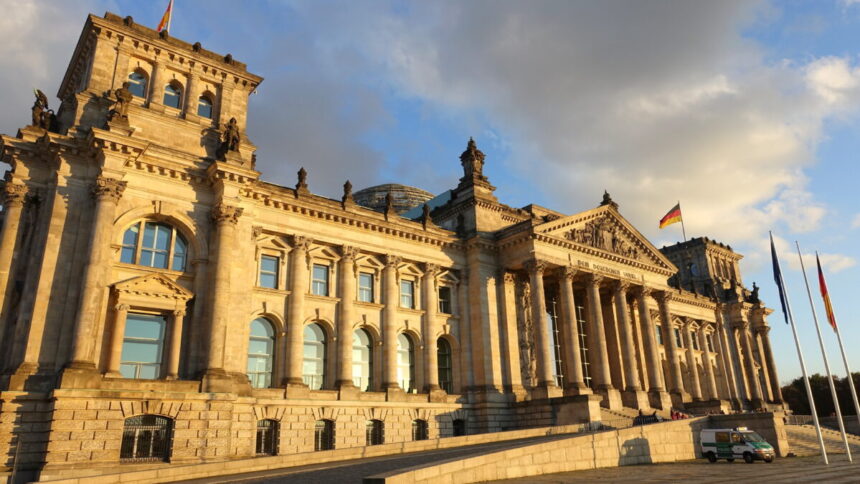
Image: The Reichstag building in Berlin, Germany. Credit: Daderot, Wikimedia Commons (CC0).