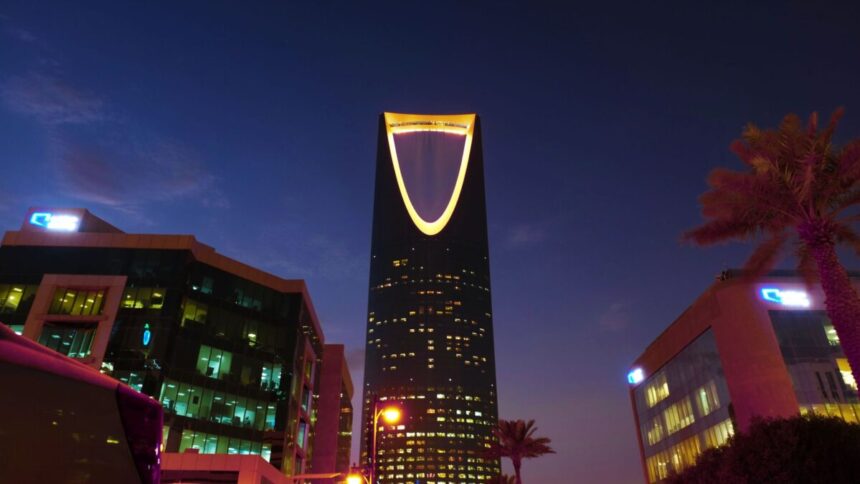
Saudi Arabia’s capital came under direct missile fire for the first time since fighting in Yemen escalated in July, after Houthi forces launched a ballistic missile toward Riyadh in the early hours of September 19.
Saudi-led coalition air defenses said they intercepted and destroyed the missile before it could strike its target. Even so, a fire broke out near King Khalid International Airport, sending a plume of black smoke over the terminal buildings and triggering hours of flight delays and cancellations, according to Al Jazeera.
An air raid alert had already gone out across the kingdom on Friday night, warning of a “hostile aerial threat.” It was the first such alert in Riyadh since the current round of fighting flared up two months ago.
Competing claims over what was hit
Coalition spokesperson Major-General Turki al-Maliki said the missile aimed at Riyadh was “thwarted by the Gulf monarchy’s air defences,” and that simultaneous Houthi attempts to strike Bisha, Taif, Farasan and Yanbu were also stopped.
Houthi military spokesman Yahya Saree gave a different account, saying his forces had carried out “two successful military operations using a large number of ballistic and cruise missiles and drones” against sites in Riyadh and an Aramco facility in Yanbu.
Saudi authorities reported no casualties or damage on their side. Ground fighting inside Yemen has been far bloodier, with recent clashes killing 12 Houthi fighters and 13 Yemeni government soldiers, Al Jazeera reported.
A war that has reached the Red Sea coast
The missile fire on Riyadh capped a month in which the Houthis pushed a lightning offensive along Yemen’s coastline, seizing the entire Red Sea shore and tightening their grip on the Bab al-Mandab strait, one of the world’s busiest shipping corridors. Wire Examiner reported earlier this month on the fall of the port town of Mocha, part of that same advance.
The United Nations has recorded more than 112,000 people displaced by the fighting, with nearly 3,000 fleeing across the water to Djibouti, according to figures cited by Malay Mail. It is the most intense fighting in Yemen since a truce broke down after holding, in various forms, since April 2022.
Saudi Arabia has responded with waves of airstrikes on Houthi-held territory, though these have not slowed the group’s advance. Riyadh’s coalition partners have also moved to shore up its defenses: Washington approved a $24.3 billion sale of 48 F-35 fighter jets to the kingdom, a deal widely read as a direct response to the deteriorating security picture.
Earlier this month, coalition spokesman al-Maliki said the “Joint Forces Command of the Coalition will deal with these attacks responsibly and firmly to protect the sovereignty of the kingdom,” a warning that has so far done little to deter further launches.
Why it matters for Pakistan
The escalation lands directly on Pakistan’s economy. Wire Examiner reported last week that the Pakistan Stock Exchange shed 699 points in a single session as Gulf tensions pushed oil prices higher, a pattern likely to repeat if the Riyadh strike unsettles markets further.
Saudi Arabia is also home to the largest Pakistani expatriate community in the Gulf, a workforce whose remittances are a significant pillar of Pakistan’s foreign exchange reserves. A prolonged security crisis in the kingdom, even one that stops short of mass casualties, carries real stakes for that community and for the money it sends home.
Islamabad has historically balanced close defense and economic ties with Riyadh against its own reluctance to be drawn into Gulf military entanglements, a tension that would sharpen considerably if Houthi strikes on Saudi territory become a regular occurrence rather than a one-off.
The Bab al-Mandab strait itself is not a side issue either. It sits on a shipping route that Pakistani exporters and importers rely on indirectly through global freight and insurance costs, meaning a tighter Houthi grip on the strait can raise costs well beyond the Gulf.
How this compares to past attacks
Riyadh has faced Houthi missile fire before, but rarely with a target this close to the capital’s infrastructure. Houthi forces first fired a ballistic missile toward Riyadh in 2017, and struck Saudi Aramco facilities in a major drone and cruise missile attack in 2019 that briefly knocked out roughly half the kingdom’s oil output.
What sets this latest strike apart is timing. It comes after the Houthis have already seized the Red Sea coastline outright, rather than launching from a defensive position, suggesting a group negotiating from strength rather than one absorbing losses.
What comes next
Flight tracking service FlightRadar24 reported “major problems” at King Khalid International Airport in the hours after the attack, with cancellations and delays before traffic gradually returned to normal, Malay Mail reported.
Analysts quoted in regional coverage described Saudi Arabia and the Houthis as “locked in the escalation trap,” with negotiations still seen as the only realistic way out even as both sides continue trading strikes. For now, neither side shows signs of stepping back.