Israeli forces shelled a string of towns across southern Lebanon on Sunday, using phosphorus munitions that set olive groves and citrus orchards ablaze in the latest breach of a ceasefire framework that was supposed to have ended hostilities months ago.
Lebanon’s National News Agency reported that the strikes hit districts across Tyre, Nabatieh, Bint Jbeil and Marjayoun, with phosphorus fires reported in agricultural land near Majdal Zoun and Buyout al-Sayyad, according to Anadolu Agency’s account of the NNA reporting.
Artillery also struck al-Mansouri and nearby towns, while Zawtar al-Sharqiyah, Mayfadoun and Yahmar al-Shaqif in Nabatieh district came under fire. In Bint Jbeil, wooded areas around Aita al-Jabal were hit, and in Marjayoun, three Israeli Merkava tanks reportedly advanced toward Deir Mimas, blocking the town’s main entrance.
One child was injured in the town of Debaal when an unidentified explosive detonated and was taken to hospital, the NNA said. Israeli forces also carried out ground sweeps and home searches in parts of the affected districts, backed by drones overhead.
A ceasefire in name only
The strikes come despite a framework agreement reached on June 26 that was meant to see Israeli forces withdraw from Lebanese territory. Instead, Israel has kept a military presence in parts of the south and has continued near-daily strikes, a pattern Lebanon has repeatedly flagged to the United Nations.
Beirut filed a formal complaint with the UN earlier this year over what it described as daily ceasefire violations, and the pace of incidents has not let up since. UNIFIL, the UN peacekeeping force tasked with monitoring the border, has said UN Security Council Resolution 1701 remains “the basic framework for restoring stability in southern Lebanon,” even as its own mandate heads toward a phase-out.
A UNIFIL statement issued last month noted that “civilians are once again paying the highest price, with many families displaced or forced to change their daily routines because of insecurity and uncertainty,” adding that peacekeepers have kept up patrols, mine clearance and support for humanitarian access despite the rising tempo of Israeli military activity.
Phosphorus use draws renewed scrutiny
White phosphorus munitions burn at extremely high temperatures and can cause severe chemical burns, making their use in or near populated and agricultural areas a recurring point of criticism from rights groups. Lebanese media have documented dozens of such attacks on farmland in the south over the past year, wiping out swaths of olive and citrus crops that many rural families depend on for income.
Sunday’s fires add to that toll just as harvest season approaches in parts of the south, compounding economic losses for communities already displaced by more than a year of intermittent fighting.
Why it matters beyond Lebanon
The renewed shelling lands at a moment when Israel is simultaneously engaged on multiple fronts, including in Gaza and against Houthi forces in Yemen, raising questions about how stretched its military posture has become and how durable any of its ceasefire commitments really are.
For Pakistan and other Muslim-majority states that have condemned Israeli military conduct in Gaza and the West Bank, the continued strikes in Lebanon reinforce a broader argument Islamabad has made at the UN: that ceasefire agreements involving Israel have repeatedly failed to hold without independent enforcement. Pakistan has previously called for stronger international monitoring mechanisms in similar contexts, including its response to Israel’s release of Lebanese detainees earlier this year under US mediation, an episode Wire Examiner reported on at the time.
The episode also underscores the fragility of the broader web of Middle East arrangements the United States has helped broker in 2026, from Gaza to the Gulf, at a moment when Washington is simultaneously trying to manage tensions with Iran. A ceasefire that exists on paper but not in practice gives Washington little leverage to argue that diplomacy, rather than force, is the more durable path in the region.
With UNIFIL’s mandate winding down and no enforcement mechanism replacing it, Lebanese officials and residents in the south say they expect the pattern of strikes to continue, leaving farmers to count losses one burned field at a time.
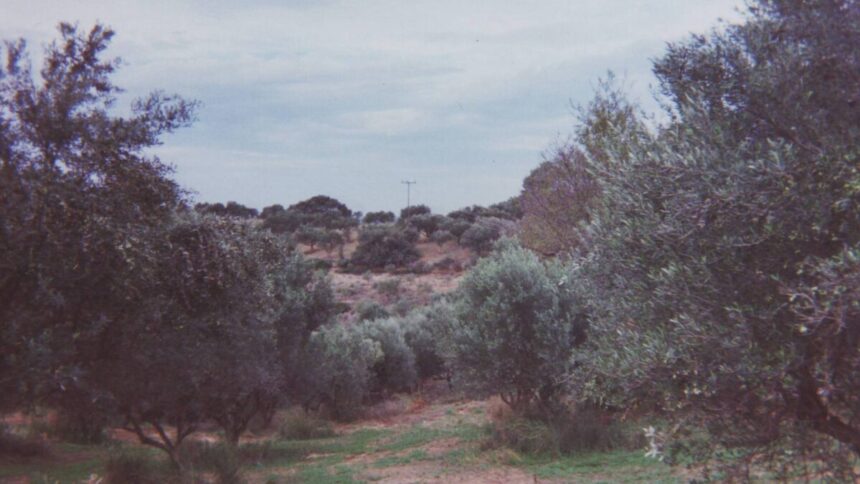
Image: Freideriki Dionysopoulou / Wikimedia Commons (CC BY-SA 3.0), illustrative photo of an olive grove.