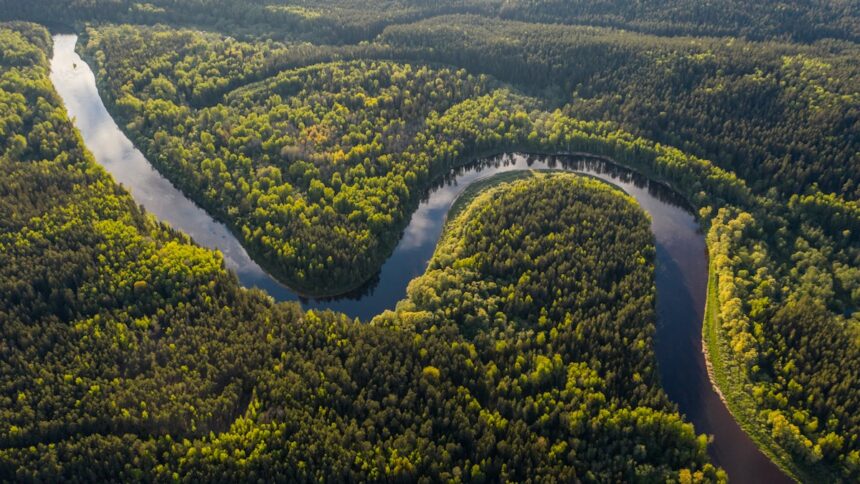
The Amazon remains the most examined yet still largely unexplored place on Earth. Despite lasers flown overhead, satellite surveillance over many years, and numerous studies, estimates suggest up to 86% of its ground area is still unknown. The difference between what technology detects and where humans have set foot is what allows the Amazon to conceal its secrets.
Some of those secrets are ancient. Others are alive right now, deliberately avoiding contact with the rest of the world.
The Myth of the Untouched Wilderness
For most of the 20th century, the standard scientific view was that the Amazon had always been a wilderness, too poor in soil and too hostile in climate to support large, complex societies. Any signs of ancient settlement were assumed to be small, scattered villages.
That view has been almost completely overturned in the last five years, thanks to a technology called lidar. Aircraft fire hundreds of thousands of laser pulses a second down through the forest canopy, and the reflected data lets researchers digitally strip away the trees to reveal what is actually on the ground underneath.
What they found rewrote the textbook.
Cities the Jungle Swallowed Whole
In Ecuador’s Upano Valley, archaeologist Stephen Rostain spent four decades excavating by hand, at a time when, in his own words, almost nobody else believed there was anything to find in the Amazon. Lidar surveys eventually confirmed what his digging had suggested: a network of cities built by the Upano people between roughly 500 BC and 600 AD, housing tens of thousands of people, connected by planned roads and organized into what researchers now believe was a coordinated regional society.
In Bolivia’s Llanos de Mojos, similar surveys uncovered the Casarabe culture, a civilization that built raised causeways, reservoirs, and monumental platform architecture across a floodplain, engineering an entire water management system to handle seasonal flooding across roughly 100 kilometers of savannah.
Then in 2026, a survey of Brazil’s Acre state published in Nature added another layer entirely.
Researchers flew more than 4,400 kilometers of lidar coverage and found 396 previously unknown geoglyphs, geometric earthworks built with deep ditches and raised banks, belonging to a culture now called Aquiry. The number of earthworks found in that single region alone rivaled earlier estimates for the entire Amazon Basin combined.
Statistical modeling based on these surveys now suggests somewhere between 10,000 and 24,000 more earthworks could still be hidden beneath the canopy, unmapped.
The Soil That Should Not Exist
One of the strangest clues to this lost history is not a building at all. It is the dirt.
Amazon soil is naturally poor and nutrient-thin, which is part of why scientists long assumed large populations could not have lived there. But across an estimated 154,000 square kilometers, an area nearly twice the size of Ireland, researchers have found terra preta: a rich, dark, human-made soil created by generations of Indigenous communities composting organic waste. It is essentially ancient, large-scale soil engineering, and it is direct evidence that pre-colonial Amazonian societies were reshaping the land on a massive scale long before Europeans arrived.
The People Still Choosing to Stay Hidden
Not everything hidden in the Amazon is in the past.
Brazil’s Indigenous affairs agency, Funai, estimates there are dozens of uncontacted Indigenous groups living in voluntary isolation across the Amazon today, deliberately avoiding contact with outsiders. The Javari Valley alone, a reserve roughly the size of Ireland, is believed to hold the highest concentration of uncontacted peoples anywhere on Earth.
These are not lost relics of an earlier era. Researchers who study them describe communities that are often well aware the outside world exists, and choose isolation anyway, a decision frequently rooted in historical trauma from violent encounters with rubber tappers, miners, and settlers going back over a century.
In one recent case, trail cameras in Brazil’s Massaco Indigenous Territory captured images of men from an uncontacted group approaching the edge of their territory to collect tools left behind by monitoring agents, evidence researchers use to track population and movement without ever making direct contact.
But isolation is getting harder to maintain. In Peru, more than 70% of the Amazon has been leased to oil companies, much of it overlapping territory where uncontacted tribes live, and logging roads have been cut for miles directly through some of these areas.
Species Science Has Not Named Yet
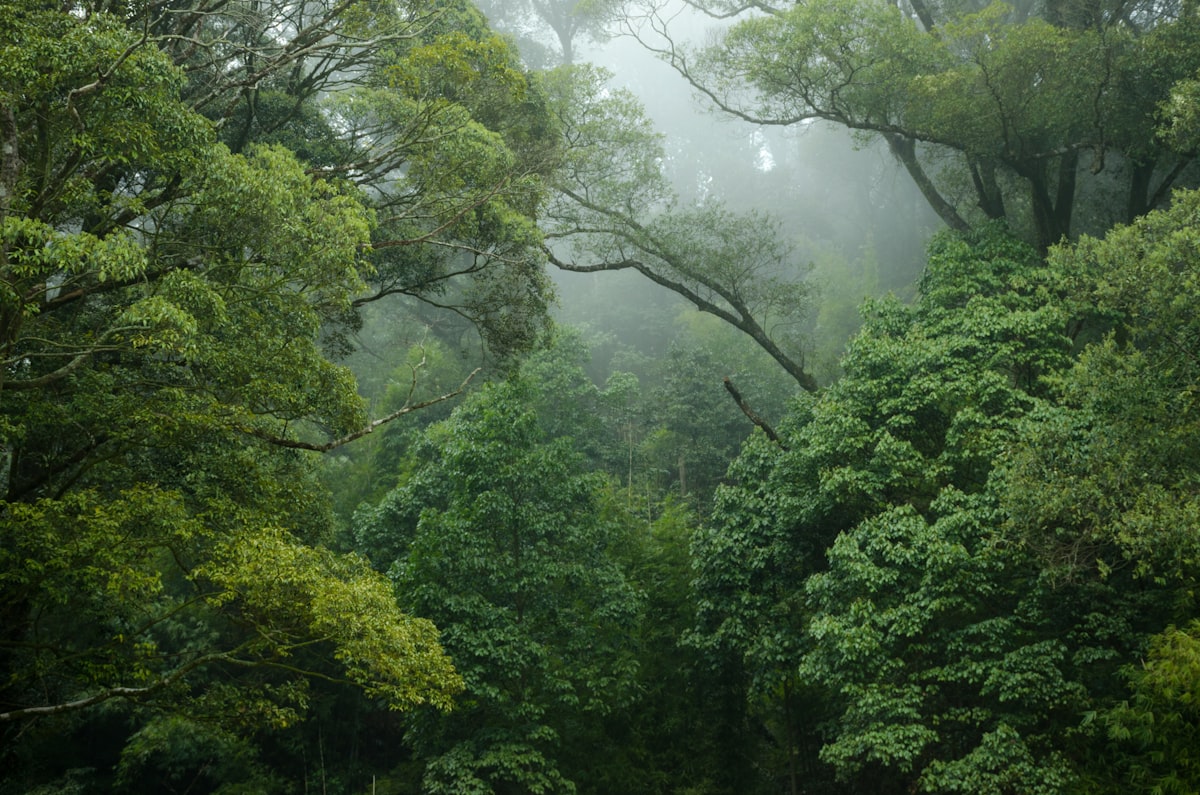
The forest is still handing over new biology, too. Research expeditions into remote stretches of the Amazon continue to turn up amphibians, insects, and birds unknown to science, species that have simply never been formally documented because so much of the region has never been surveyed on foot.
That is the throughline connecting all of this: lost cities, isolated tribes, undiscovered species. None of it is really “lost.” It is simply beyond the reach of the tools and expeditions that have existed until now.
Why the Window Might Be Closing
The uncomfortable part of this story is timing. Lidar and satellite monitoring are revealing more of the Amazon’s hidden history and hidden populations than ever before, at the exact moment deforestation, mining, oil leases, and infrastructure projects are pushing deeper into the parts of the forest that have stayed unexplored the longest.
A planned railway line in Brazil has been flagged as a potential threat to at least three uncontacted peoples. Organized crime and illegal mining are expanding into remote territories faster than protection agencies can respond.
The Amazon spent centuries being underestimated, dismissed as empty wilderness when it was in fact home to sophisticated cities and civilizations. Now that the technology finally exists to see what was always there, the question is whether what is left to find will still be standing, or still choosing to stay hidden, by the time anyone gets the chance to look.