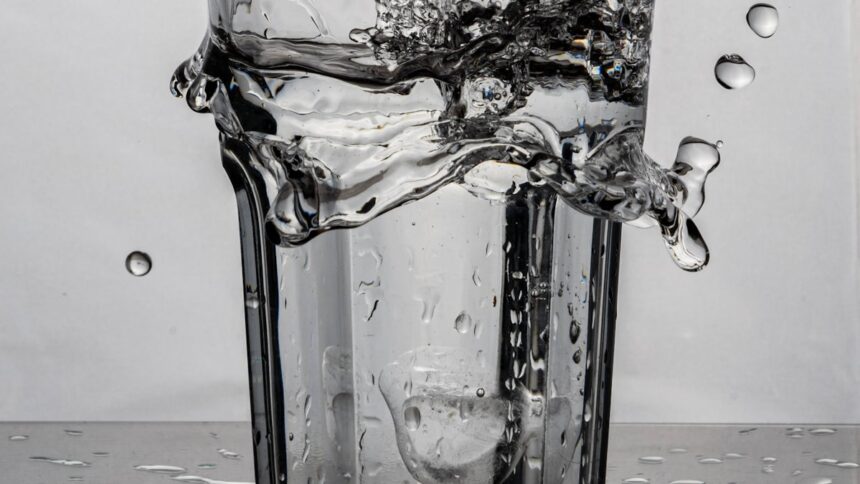
“Drink more water” is one of the most repeated pieces of health advice out there. But research shows there is a real ceiling on how much your body can actually handle, and crossing it is not a minor issue. It can cause a genuinely dangerous condition called hyponatremia, and in extreme cases, it has killed people.
This is not a case for drinking less water than you need. It is about understanding where the line actually is, and why “more is always better” is not true for hydration any more than it is for most things in the body.
What Actually Happens When You Drink Too Much
The mechanism is straightforward once you see it laid out. Your kidneys can only filter and excrete a limited amount of water per hour, generally estimated at somewhere between 750 and 1,000 milliliters. When you drink faster than that, the excess water does not just pass through. It stays in your bloodstream and dilutes your sodium levels.
Sodium is what keeps water balanced properly between the inside and outside of your cells. When blood sodium drops too low, a condition called hyponatremia, water starts moving into your cells to try to rebalance things. That is fine almost everywhere in the body. It is not fine in the brain.
According to a clinical review published on the NIH StatPearls platform, swollen brain cells increase pressure inside the skull, which can trigger confusion, headaches, and drowsiness, and in severe cases, seizures, coma, or death.
The Research Behind This Is Not Theoretical
This is not a fringe medical curiosity. It has been documented repeatedly in both military and athletic settings.
- A widely cited review of military water intoxication cases found that hospitalizations and deaths were linked to more than 5 liters, and often 10 to 20 liters, of water consumed within just a few hours.
- A study of runners in the 2002 Boston Marathon found that 13% finished the race with hyponatremia, and the strongest predictor was not dehydration; it was weight gain during the race from drinking too much fluid.
- Research into exercise-associated hyponatremia notes it shows up more in long endurance events, swimming and running especially, and is more common in women and in extreme heat.
- A case report published in a peer-reviewed medical journal described a 20-year-old military trainee who developed acute hyponatremia and dangerously low blood pressure after drinking 5 to 6 liters of water in a short window to produce a urine sample.
Psychiatric research adds another layer. A condition called psychogenic polydipsia, where patients compulsively drink excessive water, has been studied specifically because of how often it leads to hospitalization. One published review noted that seizures are the presenting symptom in up to 80% of these cases.

So How Much Water Actually Crosses the Line?
Context matters enormously here, and this is where a lot of confusion comes from. For a healthy adult drinking water at a normal pace throughout the day, hitting the commonly cited range of roughly 2.7 to 3.7 liters of total daily fluid, as referenced by the Mayo Clinic, is not dangerous.
The real risk shows up in a specific pattern: drinking large volumes rapidly, faster than roughly a liter per hour, especially during intense exercise, heat exposure, or in situations where someone feels pressured to drink fast, military training being a well-documented example.
People with smaller body size are more vulnerable, since they have less blood volume to dilute. Certain medications and underlying kidney or heart conditions also reduce the body ability to process excess water safely, which is why people with kidney disease or congestive heart failure are often given specific fluid limits by their doctors.
The Takeaway
Water is not dangerous. Drinking it faster than your kidneys can process it, is. The research consistently points to the same pattern: it is not really about a single daily number, it is about pace, context, and individual risk factors like body size, heat exposure, and underlying health conditions.
For most people going about a normal day, this simply is not something to worry about. But for endurance athletes, military trainees, or anyone drinking large volumes quickly under pressure, understanding this limit is not just trivia. It is genuinely important safety information.
This article is for general information and is not a substitute for personalized medical advice. Anyone with kidney disease, heart conditions, or specific hydration concerns should talk to a doctor about what is right for them.