
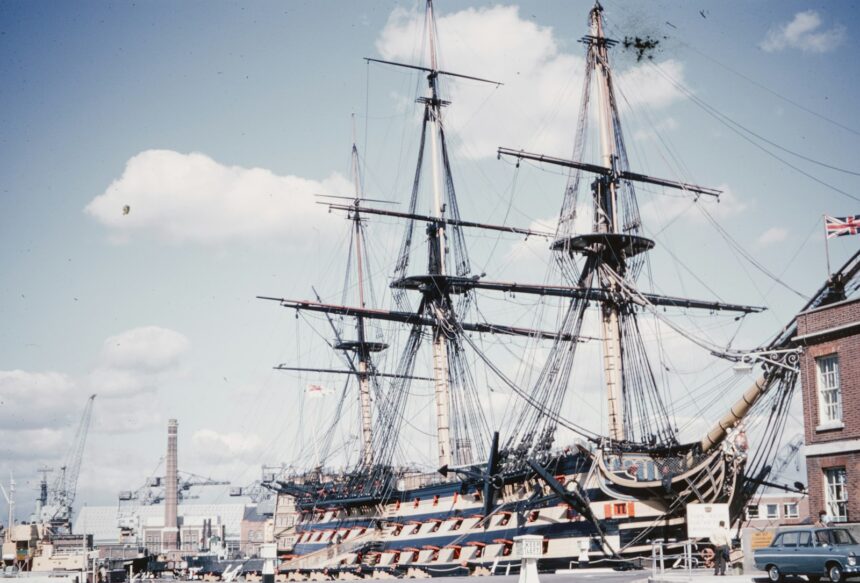
Few companies in history have held the level of power that the East India Company once did. Originally a trading enterprise seeking spices, it eventually governed an entire subcontinent, maintained a private army twice as large as Britain’s, and influenced global trade for almost three hundred years.
Its story is also one of the most consequential corporate conspiracies in history, and, strangely, it isn’t entirely over. A modern revival of the brand collapsed into bankruptcy as recently as October 2025.
Here is how the original company rose, fell, and what “East India Company” even means today.
From Spice Traders to Empire Builders
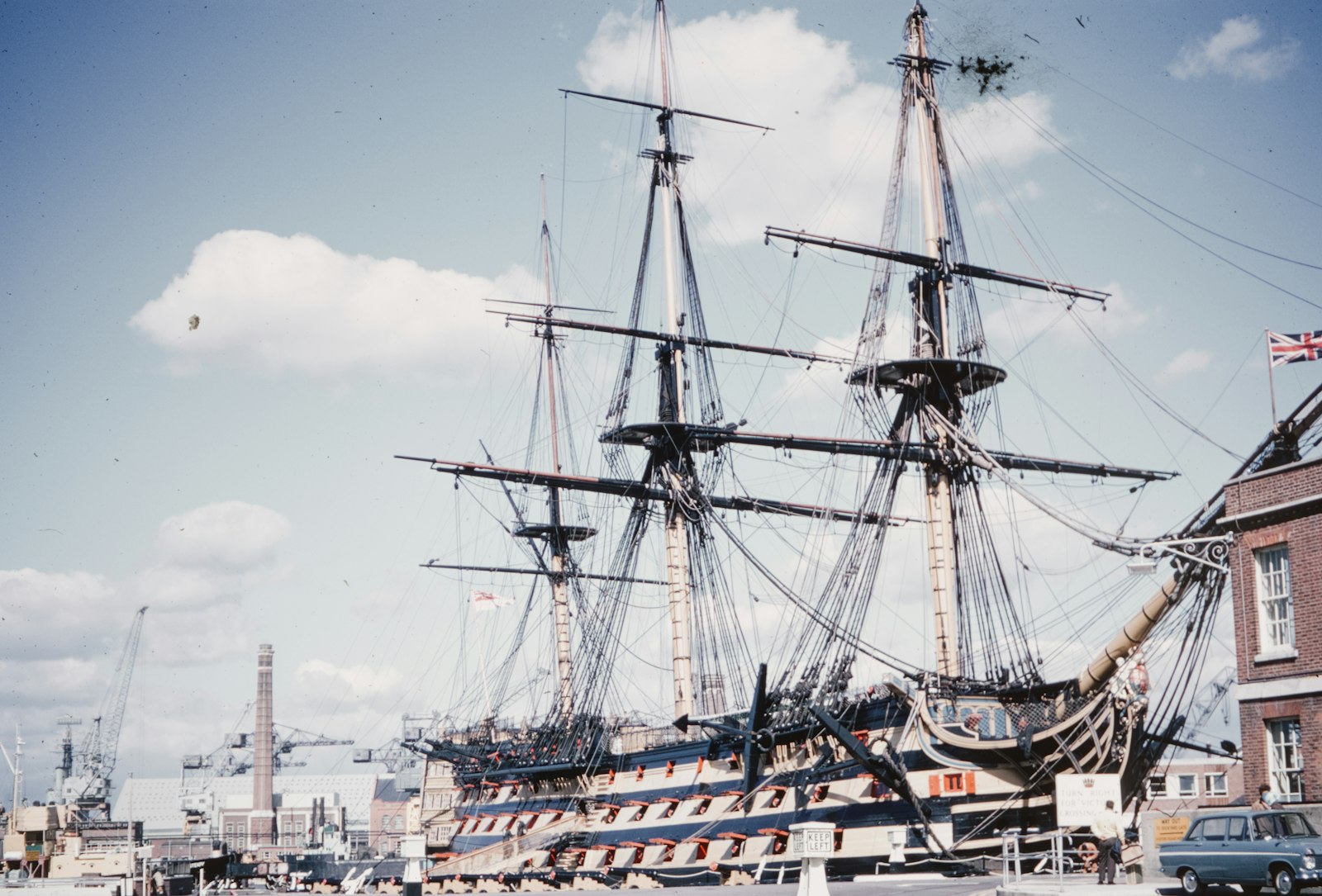
The East India Company was founded on December 31, 1600, when Queen Elizabeth I granted a royal charter to a group of London merchants, giving them a monopoly on English trade with the East Indies. The goal was simple: break into the lucrative spice trade then dominated by Spain and Portugal.
Within a few years, though, the company’s merchants realized there was more money in India’s textile industry than in Southeast Asian spices. The company pivoted, built trading posts across India, and began exporting cotton, silk, indigo, tea, and eventually opium to markets around the world.
By the mid-1700s, the company accounted for roughly half of all world trade in certain commodities. It had transformed from a trading firm into something closer to a private empire.
Winning Over the Mughal Emperor
Before any of that conquest happened, the company first had to talk its way in, and its early attempts did not go well. In 1608, an English envoy named William Hawkins traveled to the court of Mughal Emperor Jahangir seeking permission to trade, but Portuguese influence at court blocked him, and he left in 1611 with nothing to show for it.
The breakthrough came through a mix of naval muscle and diplomacy. In 1612, an English captain named Thomas Best defeated a Portuguese fleet near Surat in what became known as the Battle of Swally. The Mughal governor of Surat took notice, and in 1613, Jahangir issued a firman, an official Mughal decree, allowing the English to build a permanent trading post there.
To lock in something bigger, King James I sent Sir Thomas Roe as a formal royal ambassador to Jahangir’s court in 1615. Roe stayed for roughly three years, and his approach was different from a typical merchant’s request. He offered the English as something closer to a naval partner, positioning the company’s ships as protection against Portuguese interference along the coast, while presenting Jahangir with gifts and access to European goods and rarities the Mughal court could not easily get elsewhere.
The pitch worked. Roe secured a firman granting the English the right to trade and build factories not just in Surat, but in Agra, Ahmedabad, and Broach as well. It was not exclusive trading rights, Jahangir made clear the English would still be competing with other merchants, but it gave the company a legal foothold across a much larger stretch of the Mughal Empire than it had ever held before.
That foothold kept expanding over the following century. In 1717, the company secured its biggest prize yet: a firman from Emperor Farrukhsiyar exempting it from customs duties on trade in Bengal altogether, in exchange for a fixed annual payment. Indian historians have often called this the closest the company ever came to a blank check, and it set the stage for the unchecked expansion that followed at Plassey four decades later.
The Conspiracy That Made It a Ruling Power
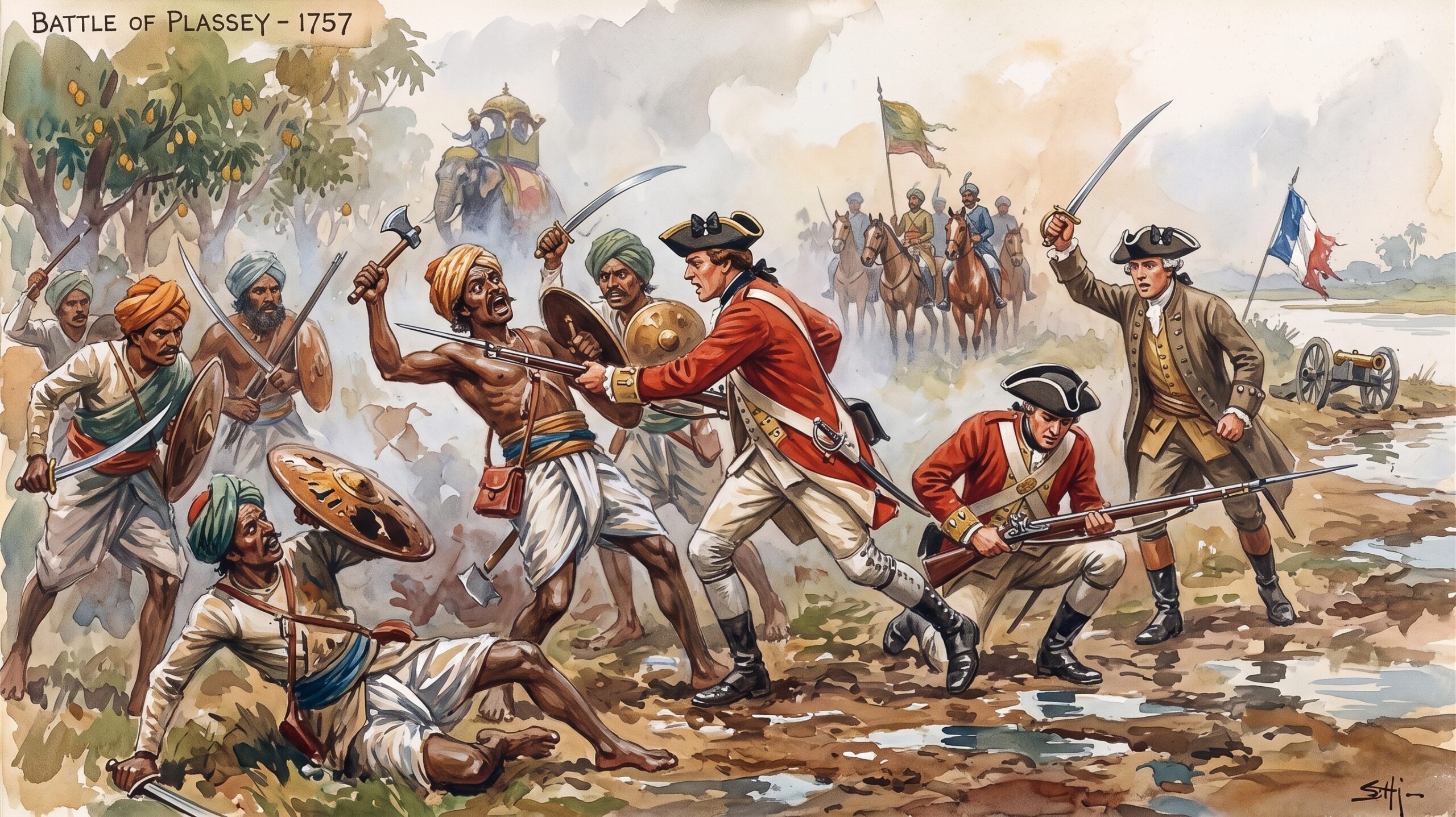
The turning point came in 1757, at the Battle of Plassey. Company officer Robert Clive secretly conspired with Mir Jafar, a general in the Bengali army, promising to install him as the new ruler of Bengal in exchange for betraying his own commander, Siraj-ud-Daula, during battle. The plan worked. Siraj-ud-Daula was defeated, and the company effectively took control of Bengal, one of the wealthiest regions in India, without formally conquering it in open warfare.
That single act of political engineering gave the company something no trading firm had ever held before: the right to collect taxes across an entire region. By 1765, it held official tax-collection rights over Bengal, Bihar, and Odisha, turning a commercial venture into a governing power almost overnight.
What followed was decades of exploitation. Company policies imposed heavy taxation on Indian farmers, seized land, and prioritized cash crops for export over food security, a pattern historians link directly to devastating famines, including the Bengal famine of the 1770s. The company also ran an illegal opium trade into China, triggering the First and Second Opium Wars when Chinese authorities tried to stop it.
The Fall: From Ruler to Relic
The company’s grip on India began to unravel after the Indian Rebellion of 1857 (also called the Sepoy Mutiny), a large-scale uprising against company rule. The British government used the rebellion as justification to strip the company of its power. The Government of India Act of 1858 transferred all governing authority to the British Crown, formally launching the era known as the British Raj.
The company itself limped on as an administrative shell for a few more years, managing leftover duties like the tea trade, before Parliament formally dissolved it on June 1, 1874, 274 years after its founding.
Is the East India Company Still Around Today?
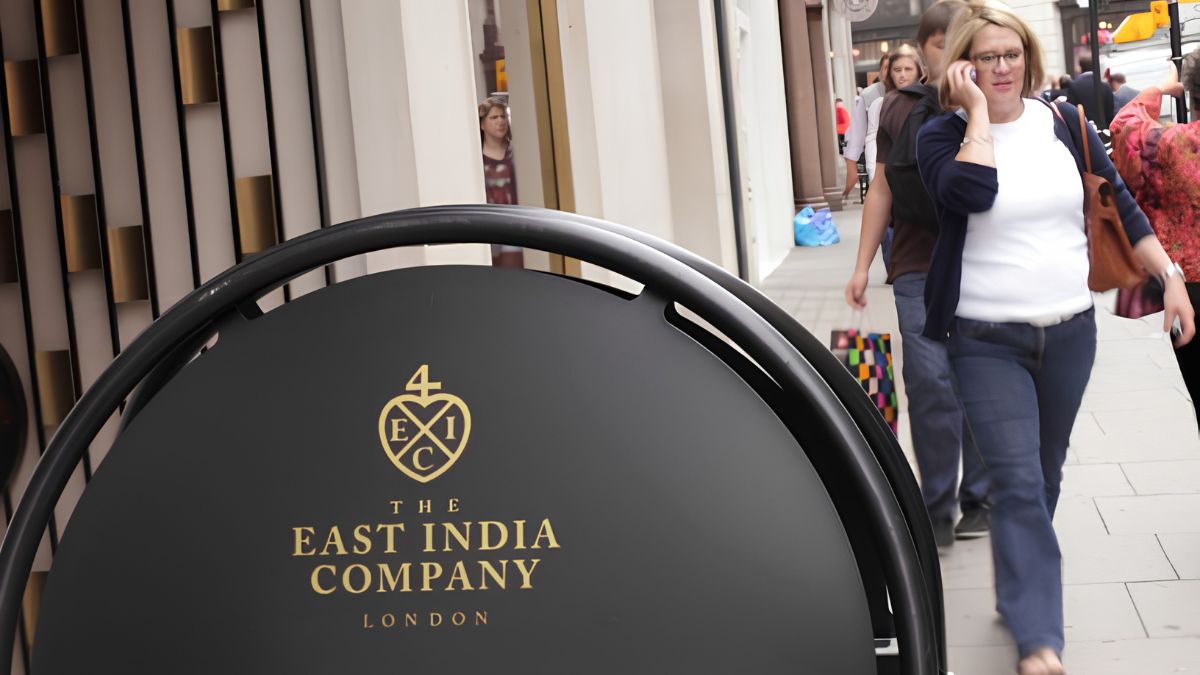
In a strange twist, the name did not stay buried. In 2010, British-Indian entrepreneur Sanjiv Mehta acquired the rights to the “East India Company” name and relaunched it, not as a colonial power this time, but as a luxury lifestyle brand selling premium teas, chocolates, spices, and collectibles from a flagship store on New Bond Street in London’s Mayfair district.
Mehta framed the revival as a symbolic reversal: an Indian businessman now owned the name of the firm that once colonized India. He described the new venture as one built on “compassion” rather than the aggression of its predecessor, and at its peak the brand expanded into the Middle East and the US with backing from investors including the Lulu Group.
That second chapter has now also come to an end. In October 2025, the modern East India Company Limited appointed liquidators after accumulating debts exceeding £950,000, including unpaid taxes and wages owed to employees. Its Mayfair store has been vacated and listed for rent, and its website is offline.
So, to answer the question directly: no, the East India Company is not still operating, in either of its forms. The original company was dissolved in 1874. Its 21st-century revival, after 15 years as a luxury retailer, went into liquidation in late 2025.
What remains is a name, one that, twice now, has carried outsized ambition and an outsized fall.